• About UGM
  • Academic Portal
  • IT Center
  • Library
  • Research
  • Webmail
  • English
    • Indonesia
    • English
Universitas Gadjah Mada Universitas Gadjah Mada
Faculty of Agricultural Technology
  • Home
  • About Us
    • History of Faculty
    • Vission and Mission
    • Dies Natalis
    • Goals and Objectives
    • Institution Structure
    • Faculty Management
    • Facilities
      • Library
      • Laboratory
    • Lecturer Staff
    • Cooperation
    • Contact
  • Education
    • Department
    • Study Program
    • Graduate & Postgraduate Program
    • Accreditation
    • Academic Calendar
    • SUMMER COURSE
    • Fast Track Program
  • Research
    • Journal
    • Books
  • College Student
    • Information
    • Student Services
    • Student Organizations
    • Internship
    • Scholarship
  • Alumni
    • List of Graduates
    • Career
    • Tracer Study
  • Home
  • SDG 17: Partnerships for the Goals
  • (Page 2)
Arsip:

SDG 17: Partnerships for the Goals

PIONIR Agrophoria 2026 Draws to a Close, New Agrotech Students Ready to Embrace University Life

SDG 16: Peace Justice and Strong InstitutionsSDG 17: Partnerships for the GoalsSDG 4: Quality Education Thursday, 6 August 2026

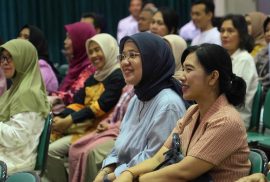
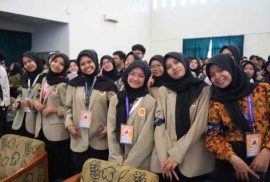
The Faculty of Agricultural Technology (FTP), Universitas Gadjah Mada (UGM), officially closed its two-day PIONIR Agrophoria 2026 orientation program on Wednesday (6/8), at Kamarijani Soenjoto Auditorium, FTP UGM. Over the course of the event, incoming students were introduced to university life through sessions on UGM’s core values, academic culture, character development, and the range of competencies needed to support their learning and personal growth throughout their studies at FTP UGM.

Dean of FTP UGM, Prof. Dr. Ir. Eni Harmayani, M.Sc., described Agrophoria as a pivotal first step for new students, both in getting to know the campus and in absorbing the values that will guide them throughout their time as university students. “Of course, beyond introducing students to campus life, this Agrophoria program is also about introducing UGM’s core values, academic culture, and the spirit of learning, as well as equipping them to grow in higher education going forward,” said the Dean of FTP UGM.

The Dean also encouraged new students to carry the “Four C” with them throughout their academic journey: creativity, competence, character, and compassion. Creativity, she explained, is the capacity to keep generating innovation; competence calls for continuously sharpening one’s skills and developing personal potential; character is expressed through honesty and a sense of responsibility; while compassion drives students to care for others and work collaboratively. Together, these four values are intended to form the foundation for FTP UGM graduates who are not only academically excellent but also hold strong integrity and social awareness.

That spirit carried through the second day of PIONIR Agrophoria 2026, which offered new students a mix of inspiration and hands-on learning. Participants took part in a Student Achievement Talkshow as well as the Cultivating Agrotechnovation Talkshow, themed “Synthetic Food Innovation and Natural Resource Efficiency for a Sustainable Future.” Students also joined a Focus Group Discussion on Resilience Food Strategy to sharpen their critical thinking and teamwork skills, and completed a “Build My Path” mind-mapping exercise to chart their personal development plans for their four years of study at FTP UGM.

Beyond academic preparation, new students were given a closer look at campus life through the Student Organization Expo, which brought together the various student associations and interest units active within FTP UGM. The expo gave participants the chance to explore different avenues for developing their interests and talents, including a hands-on rock-climbing activity at the booth of Gitapala, FTP UGM’s student mountaineering and nature-exploration club, carried out under close supervision and established safety procedures. The activity offered new students an early opportunity to identify where they might channel their energy and interests during campus life.

The PIONIR Agrophoria 2026 series concluded with a spirited parade of all participant groups, symbolizing the unity of this year’s cohort of “Agrotech Muda” (Young Agrotechnologists). The atmosphere was further energized by the presence of Ultras Tractor, FTP UGM’s student supporter group, whose enthusiasm helped close out the event on a high note. The program was then formally declared closed, marking the end of this year’s new student orientation series. Festivities continued with a performance by PSTP Band (Paguyuban Seni Teknologi Pertanian, the Faculty’s agricultural technology arts community), which invited all participants to sing along together as a closing highlight of the event.

Through PIONIR Agrophoria 2026, FTP UGM hopes its new students will be able to adapt smoothly to university life, develop their academic and non-academic potential in a balanced way, and grow into creative, competent Agrotech Muda who hold strong integrity and a genuine sense of care ready to contribute to Indonesia’s agricultural development and food security.

This activity supports the achievement of the Sustainable Development Goals (SDGs), particularly SDG 4: Quality Education, through the character-building and competency development provided to new students; SDG 16: Peace, Justice, and Strong Institutions, through the strengthening of academic culture and integrity values; and SDG 17: Partnerships for the Goals, through the collaboration among faculty leadership, lecturers, education staff, student organizations, and students in creating an inclusive and collaborative learning environment.

Contributor : Bernadetta Shella
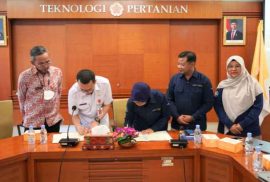
FTP UGM and Semarang City Government Strengthen Research-Based Collaboration to Develop Urban Gastronomy

SDG 11: Sustainable Cities and CommunitiesSDG 17: Partnerships for the Goals Wednesday, 5 August 2026

The Faculty of Agricultural Technology (FTP), Universitas Gadjah Mada (UGM), strengthened collaboration with the Regional Research and Innovation Agency (BRIDA) of Semarang City through the signing of a Cooperation Agreement (PKS) and a Self-Managed Cooperation Contract, followed by a follow-up discussion on the “Study on the Development Potential of Urban Gastronomy in Semarang City,” held on Wednesday (5/8) at the Operation Room, FTP UGM. The collaboration marks an initial step toward a research-based study aimed at strengthening Semarang’s flagship culinary products as part of the city’s branding strategy and creative-economy development.

In the discussion, Head of BRIDA Semarang City, Dr. Bagus Irawan, S.T., M.T., M.Eng., described gastronomy development as a strategic effort supporting the strengthening of branding for Semarang City’s flagship products in order to accelerate the growth of the creative economy. In addition, Asdani Kindarto, S.Sos., M.Eng., Ph.D., Head of the Research and Development Division at BRIDA Semarang City, emphasized that developing gastronomy requires an approach that looks not only at culinary products, but also integrates cultural values that have so far remained scattered across various narratives. According to him, a strong gastronomic foundation will become an important asset in building the city’s identity. “Good diplomacy begins with the stomach. That’s why strengthening the culinary foundation will make it easier to achieve Semarang’s city-branding goals,” he said.

Responding to this point, Bambang Dwi Wijatniko explained that developing urban gastronomy requires standards capable of preserving both the identity and the quality of regional culinary products. He noted that the process should not stop at cataloguing traditional foods, but must also address food safety, marketing, and product sustainability. “Recipe standardization serves to reinforce a product’s identity. Alongside recipe variation, the key factors that must be addressed are sanitation, branding, and shelf life,” Bambang explained. 

He added that one of the requirements for a city to gain recognition as a UNESCO Creative City of Gastronomy is to have at least three flagship culinary products, hold regular seminars, and produce annual reports on culinary product development and activities, noting that seminars and masterclasses are an important part of building a sustainable gastronomy ecosystem.

Prof. Dr. Ir. Eni Harmayani, Dean of FTP UGM, said the planned study would not only identify culinary potential but also produce scientific recommendations that local governments can use to formulate its gastronomy development strategy. The study will focus on co-creation value and existing conditions, culinary diversity as a marker of regional identity, and the history and cultural acculturation that have shaped Semarang’s culinary richness.

Input on the research approach was also offered by Dr. Dwi Larasatie Nur Fibri, who highlighted the importance of developing a comprehensive survey instrument and applying analytical methods suited to processing data at a macro scale. She added that structured culinary documentation is an important step for strengthening the region’s gastronomic identity and raising public awareness of local culinary heritage.

Through this collaboration, FTP UGM, together with BRIDA and the Semarang City Regional Development Planning Agency (Bappeda), hopes to produce a study that not only strengthens Semarang’s culinary identity but also serves as the basis for research-based policymaking in urban gastronomy development. The collaboration is expected to help boost the region’s competitiveness through the preservation of culinary heritage, the strengthening of the creative economy, and the development of gastronomy networks at both the national and international levels.

This activity supports the achievement of the Sustainable Development Goals (SDGs), particularly SDG 11: Sustainable Cities and Communities, through the strengthening of the city’s identity based on its culinary heritage; SDG 8: Decent Work and Economic Growth, through the development of a gastronomy-based creative economy; and SDG 17: Partnerships for the Goals, through collaboration between universities and local government in producing research-based policy.

Contributor : Bernadetta Shella

FTP UGM Welcomes 338 New Students, Strengthens Synergy with Parents to Support Academic Success

SDG 17: Partnerships for the GoalsSDG 4: Quality Education Tuesday, 4 August 2026

The Faculty of Agricultural Technology (FTP), Universitas Gadjah Mada (UGM), held the Meeting and Gathering of Parents of New Students for the 2026/2027 Academic Year on Monday (3/8) at the Kamarijani Soenjoto Auditorium, FTP UGM. The event was attended by faculty leadership, the Parents’ Association (POTM), and parents of new students, as an effort to introduce the academic environment while building synergy between the faculty and families to support students’ academic success. For the 2026/2027 academic year, FTP UGM welcomed 338 new students, comprising 113 students in the Agricultural Industrial Technology (TIP) study program, 105 students in the Agricultural Engineering (TEP) study program, and 120 students in the Food Technology and Agricultural Products (TPHP) study program.

In her remarks, Prof. Dr. Ir. Eni Harmayani, M.Sc., Dean of FTP UGM, expressed her appreciation to the parents who had entrusted their children’s education to FTP UGM. According to her, the university years mark the beginning of a process of character building, independence, and responsibility that will equip students to face future challenges. “I extend my congratulations and warm welcome, and thank you for the trust you have placed in us to accompany your children through their higher education,” said Eni.

She added that students would be entering a phase of life different from before, one in which they are required to learn to make decisions independently. “Until now they have relied on their families, so from today they will learn to become more independent, more responsible, and more mature in making decisions. Some new students will be living far from home for the first time, and Yogyakarta is known as a comfortable, student-friendly city  and the food is affordable too,” she said, drawing laughter from the audience.

Confidence in FTP UGM was also expressed by Cahyo Hendro Atmoko, S.T.P., M.Sc., father of Attar Muhammad Nurul Karim, who spoke on behalf of the parents of new students. According to him, the quality of human resources at FTP UGM gave him confidence that students would receive optimal academic guidance throughout their studies. “As parents, we hope FTP UGM can help our children grow and become even better. It was also mentioned earlier that FTP has 18 professors, around 104 lecturers, and around 1,300 students. I think this ratio of roughly one lecturer for every ten students is very good, because it gives students the opportunity to interact and receive more intensive guidance from their lecturers,” he said.

As an initial foundation for parents in supporting their children through their studies, Prof. Dr. Yudi Pranoto, S.T.P., M.P., Vice Dean for Academic and Student Affairs at FTP UGM, presented the academic system, student services, and the various mentoring programs students would receive. Through this session, parents gained an overview of the learning process, academic guidance, and the range of services available to support students’ development throughout their studies at FTP UGM.

Also present was Herman Wahyu Dwi Maelana, S.Pd., M.M., a board member of the FTP UGM Parents’ Association (POTM), who introduced POTM’s role as the faculty’s strategic partner in bridging communication between parents and the institution. Meanwhile, Erlangga Adi Setiawan, Chair of the FTP UGM Student Executive Board (BEM) for 2026, introduced student life at FTP UGM as a space for students to develop leadership, organizational skills, creativity, and networks. Information on academic administrative services was also presented by Agung Wijayanto, S.E., M.Acc., Head of the FTP UGM Administration Office, followed by presentations from each department covering their study program profiles, curricula, facilities, and the academic development opportunities available to students.

Through this event, FTP UGM hopes to build close communication and collaboration between the faculty, parents, and students from the very start of their studies. This synergy is expected to create a conducive learning environment that enables students to develop into excellent, principled, adaptive graduates who are ready to contribute to society.

This activity supports the achievement of the Sustainable Development Goals (SDGs), particularly SDG 4: Quality Education, through the strengthening of educational services and collaboration between the university and parents of students, and SDG 17: Partnerships for the Goals, through synergy between the faculty, families, and the academic community in supporting students’ educational success.

Contributor: Bernadetta Shella Herdanti

ASEAN Cultural Exchange Programme Brings Together UPM Malaysia and FTP UGM Students

SDG 10: Reduced InequalitiesSDG 17: Partnerships for the GoalsSDG 4: Quality Education Thursday, 30 July 2026

Learning to play the gamelan, trying making batik, and performing classical Yogyakarta dance became unforgettable experiences for students from the Faculty of Biotechnology and Biomolecular Sciences, Universiti Putra Malaysia (UPM), during the UPM ASEAN Cultural Exchange – Indonesia Programme, held jointly with the Faculty of Agricultural Technology (FTP), Universitas Gadjah Mada (UGM), on July 27–28, 2026, in Yogyakarta. The programme brought together 14 UPM students from the Student’s Associations of the Faculty of Biotechnology and Biomolecular Sciences, UPM, and 14 FTP UGM students for an academic and cultural exchange aimed at broadening participants understanding of higher education systems, strengthening cross-cultural communication skills, and deepening friendships among students across the ASEAN region.

The programme, accompanied by Dr. Fairolniza Mohd Shariff and Mrs. Nurul Hidayah Samadi from UPM, also marked an initial step toward establishing cooperation between UPM’s Faculty of Biotechnology and Biomolecular Sciences and FTP UGM, particularly the Department of Food Technology and Agricultural Products at FTP UGM. Through a series of academic and cultural activities, students from both universities were given the opportunity to exchange experiences while building international networks.

On the occasion, Vice Dean for Academic and Student Affairs, Prof. Dr. Yudi Pranoto, S.T.P., M.P., said the programme reflected both institutions’ commitment to strengthening academic collaboration and inter-university relations across the ASEAN region. According to him, the activity gave students a space to develop the cross-cultural competencies that are increasingly needed in today’s global era.

“ASEAN is more than a regional organization, it is a community built upon diversity, mutual respect, and shared aspirations. Through programmes such as this, we create opportunities for our young generation to appreciate different cultures, learn from one another, and develop the intercultural competencies that are essential in today’s interconnected world,” he said.

The participants’ enthusiasm was evident in the impressions they shared after taking part in the programme’s activities. One UPM student, Norhaikal Bin Norhaizad (Haikal), said the programme was a highly memorable experience, as it gave him the opportunity to meet and build friendships with UGM students.

“It is a very fun programme between UPM and UGM. We can make friends with the UGM students. If I could describe this programme in one word, I would say it is an amazing programme,” he said.

For Nor Syameel Azraie Bin Nor Ezlie Azram (Syameel), getting to know Indonesian culture was the most memorable part of the programme.

“I learned a lot about Indonesian culture, especially the gamelan, the food, and the people. If I had to describe this programme in one word, it would be fun,” he said.

Meanwhile, Nur Irdina Rauqah Binti Nasrun (Dina) said her first visit to Yogyakarta exceeded her expectations.

“Everything is just fantastic about Jogja, the food, the environment, and also the people. I really enjoyed this programme,” she said.

In addition to introductory sessions and presentations on university profiles and student activities, UPM students were also taken on a tour of laboratories at FTP UGM to learn about the faculty’s teaching and research facilities. The interaction offered a chance to exchange experiences about academic life at both universities while opening up opportunities for future collaboration.

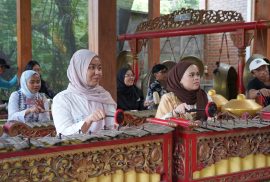
The cross-cultural experience continued with a visit to Pentingsari Tourism Village, Sleman. There, students from both universities learned to play the gamelan, tried their hand at batik-making, and studied classical Yogyakarta dance according to its traditional forms.

Through the UPM ASEAN Cultural Exchange – Indonesia Programme, FTP UGM continues to strengthen its commitment to supporting the internationalization of higher education through learning experiences that integrate academics and culture. The programme is expected to be the beginning of broader collaboration between FTP UGM and UPM  spanning education, research, and student mobility helping to produce graduates with both a global perspective and an appreciation for cultural diversity.

This activity supports the achievement of the Sustainable Development Goals (SDGs), particularly SDG 4: Quality Education, through the strengthening of international learning experiences; SDG 10: Reduced Inequalities, through improved cross-cultural understanding; and SDG 17: Partnerships for the Goals, through strengthened collaboration among universities across the ASEAN region.

Contributor: Bernadetta Shella

Sustainable Workspace Workshop Invites FTP UGM Community to Build a Low Carbon Footprint Office

SDG 12: Responsible Consumption and ProductionSDG 13: Climate ActionSDG 17: Partnerships for the Goals Tuesday, 28 July 2026

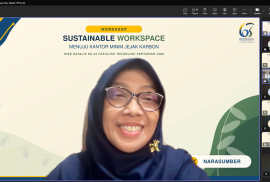
Building a more sustainable work environment requires a change in culture, not just the application of technology. With that spirit in mind, the Faculty of Agricultural Technology (FTP), Universitas Gadjah Mada (UGM), held the “Sustainable Workspace Workshop: Towards a Low Carbon Footprint Office” on Tuesday, July 28, 2026, as part of the series of events marking FTP UGM’s 63rd Dies Natalis (anniversary). The workshop, attended by lecturers and education staff, featured Ir. Sentagi Sesotya Utami, S.T., M.Sc., Ph.D., IPU., as a speaker discussing strategies for building a more environmentally friendly workplace.

Through the workshop, participants were encouraged to understand that the concept of a sustainable workspace is not limited to energy-use efficiency, but also encompasses changes in everyday behavior within the workplace. Various aspects such as reducing paper use, improving waste management, using resources wisely, and adopting working habits that support carbon-footprint reduction  form an important part of building a sustainable office.

As a faculty with a strong focus on sustainability issues, FTP UGM believes that the application of environmentally friendly principles needs to begin within its own internal work environment. The workshop therefore served as a discussion space for lecturers and education staff to explore concrete steps that could be applied in day-to-day office activities.

In addition to the presentation of materials, participants also took part in an interactive discussion and workshop session to identify practices with the potential to support the creation of a low-carbon-footprint office. Through this activity, participants were encouraged to exchange ideas and formulate solutions relevant to the needs of FTP UGM’s work environment.

The workshop reflects FTP UGM’s ongoing commitment to developing a work culture aligned with the principles of sustainability. In line with the theme of the 63rd Dies Natalis, the event is expected to raise awareness among the academic community that every individual has a role to play in building a campus environment that is more efficient, healthier, and more environmentally responsible.

This activity supports the achievement of the Sustainable Development Goals (SDGs), particularly SDG 12: Responsible Consumption and Production, through the adoption of more sustainable working practices; SDG 13: Climate Action, through efforts to reduce carbon footprints within the office environment; and SDG 17: Partnerships for the Goals, through collaboration among the academic community in building a sustainable work culture.

Contributor : Bernadetta Shella

1234

Recent Posts

  • Three DTPB FTP UGM Study Programs Secure ASIIN International Accreditation Through 2030
  • Dari Benih hingga Lahan, FTP UGM dan Sang Hyang Seri Kembangkan Teknologi Pertanian Berbasis Data
  • Learning Across Cultures at Jeonbuk National University, South Korea
  • Beautiful Learning Journey: A Student Exchange at JBNU, South Korea
  • My Experience at Khon Kaen University (TPHP Student Mobility Program)

UGM News

  • UGM’s Youngest Doctoral Graduate Advances Native Chicken Genetics
  • UGM and NTU Host ASEAN Summer School on Renewable Energy and Smart Cities
  • BSI Scholarship Helps First-Generation Student Silvia Study Chemistry at UGM
  • Black Aromatic Ginger and Gotu Kola: UGM Study Finds Potential Herbal Therapy for Optic Nerve Inflammation
  • UGM Promotes Green Dentistry Through Free Dental Checkups and Oral Health Education
Universitas Gadjah Mada

UNIVERSITAS GADJAH MADA
FACULTY OF AGRICULTURAL TECHNOLOGY
Jl. Flora No. 1 Bulaksumur
Yogyakarta, Indonesia 55281
+62 274 589797
+62 274 589797
fateta[at]ugm.ac.id

Faculty Information

  • News Release
  • Event
  • Academic
  • Scholarship
  • Job Vacancy
  • Grant

Department

  • Food and Agricultural Product Technology
  • Agricultural Engineering and Biosystem
  • Agro-industrial Technology

Supporting Units

  • Quality Management Unit
  • Agricultural Technology Career Center

Journals

  • Agritech
  • Agroindustrial Journal
  • Indonesian Food and Nutrition Progress

© 2026 Faculty of Agricultural Technology UGM

SitemapPrivacy PolicyContact

KEBIJAKAN PRIVASI/PRIVACY POLICY

[EN] We use cookies to help our viewer get the best experience on our website. -- [ID] Kami menggunakan cookie untuk membantu pengunjung kami mendapatkan pengalaman terbaik di situs web kami.I Agree / Saya Setuju