• About UGM
  • Academic Portal
  • IT Center
  • Library
  • Research
  • Webmail
  • English
    • Indonesia
    • English
Universitas Gadjah Mada Universitas Gadjah Mada
Faculty of Agricultural Technology
  • Home
  • About Us
    • History of Faculty
    • Vission and Mission
    • Dies Natalis
    • Goals and Objectives
    • Institution Structure
    • Faculty Management
    • Facilities
      • Library
      • Laboratory
    • Lecturer Staff
    • Cooperation
    • Contact
  • Education
    • Department
    • Study Program
    • Graduate & Postgraduate Program
    • Accreditation
    • Academic Calendar
    • SUMMER COURSE
    • Fast Track Program
  • Research
    • Journal
    • Books
  • College Student
    • Information
    • Student Services
    • Student Organizations
    • Internship
    • Scholarship
  • Alumni
    • List of Graduates
    • Career
    • Tracer Study
  • Home
  • News Release
Arsip:

News Release

Learning Across Cultures at Jeonbuk National University, South Korea

News ReleaseSDG 17: Partnerships for the GoalsSDG 1: No PovertySDG 4: Quality Education Monday, 24 August 2026

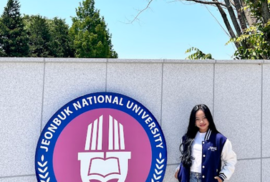
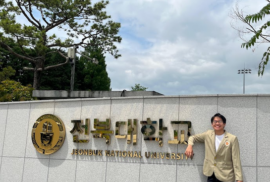
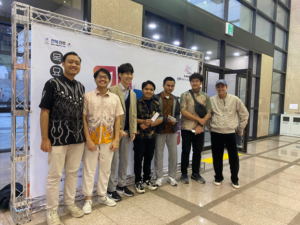
A student exchange at Jeonbuk National University (JBNU), South Korea, was part of my academic experience as a 2023 student of Agricultural Engineering at the Faculty of Agricultural Technology, Universitas Gadjah Mada. During the program, courses were taken at the Department of Bioindustrial Machinery Engineering, with the exchange running from February 28 to June 19, 2026.

The courses included Energy and Environment Technology, New Energy Industry, Food Microbiology, Mental Health Problem, Environment and Health in Modern Korea, and Korean Reading. The subjects covered a range of topics, from energy and environmental technology to food microbiology and Korean language. Several of these topics were also related to Agricultural Engineering, particularly those concerning energy, food, and the environment.

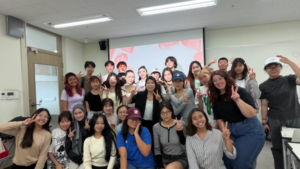
The academic environment at JBNU was different from the one at UGM. Classes, assignments, and daily routines required some adjustment. Having students from different backgrounds in the same learning environment also created opportunities to communicate and get to know people with different experiences.

Outside the classroom, getting to know local students became part of everyday life at JBNU. Conversations often covered university life, studies, and differences between living in Indonesia and Korea. These interactions made it easier to become familiar with the campus environment and daily life in Korea.

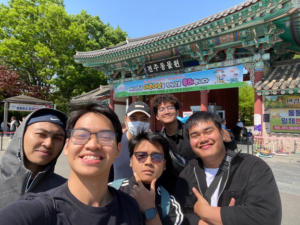
One of the campus activities was the school festival. Various activities were organized by the students, creating a more relaxed atmosphere around the university. Spending time at the festival with friends and other students was a nice break from regular classes.

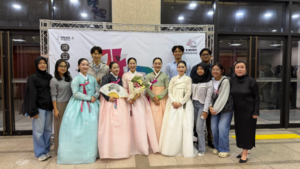
During the exchange period, Eid al-Fitr was also celebrated at the Embassy of the Republic of Indonesia (KBRI) in South Korea. Being away from home during Eid made the gathering especially nice. Meeting other Indonesians, having meals together, and talking about life in Korea brought a familiar atmosphere during the holiday.

A visit to a paper-making museum was another activity outside the university. The visit introduced the traditional process of paper making, including the tools and techniques used. It was an interesting way to see a part of Korean traditional craft firsthand.

Living in Korea for several months also meant getting used to everyday things, from navigating a different academic schedule to communicating in a new environment and managing daily activities independently. These experiences became part of the routine throughout the exchange.

The courses at the Department of Bioindustrial Machinery Engineering also offered a different perspective on topics related to Agricultural Engineering. Energy, environmental technology, and food were approached from an engineering perspective, which helped connect the courses at JBNU with the field of study at UGM.

The exchange period at JBNU brought together regular academic activities with everyday experiences outside the classroom. Classes, conversations with local students, campus events, Eid at the KBRI, and visits to places such as the paper-making museum were all part of the four months spent studying in South Korea.

This international exchange was made possible through the generous funding of the “Hibah Pertukaran Mahasiswa Internasional untuk Inbound dan Outbound (Skema EQUITY) tahun 2025/2026 Tahap 2”, for which I am profoundly grateful.

Written and Reported by: Syrin Alia Zahra Marin

Beautiful Learning Journey: A Student Exchange at JBNU, South Korea

News ReleaseSDG 17: Partnerships for the GoalsSDG 1: No PovertySDG 4: Quality Education Monday, 24 August 2026

Ever since I started enrolling in my bachelor’s degree at Universitas Gadjah Mada, I have dreamt of joining a student exchange program with one of UGM’s partner universities in developed countries. Studying abroad will allow university students like me to gain new perspectives on the world, broaden our cultural knowledge, and experience a new educational environment.

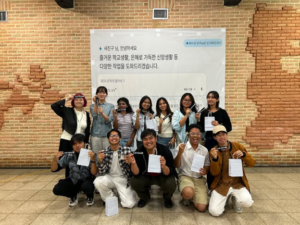
South Korea has been one of the top study destinations for students worldwide, with more than 30 of its universities in the global top 1000. One of South Korea’s finest universities is Jeonbuk National University (JBNU), located in Jeonju. JBNU has been collaborating with Universitas Gadjah Mada for years and has consistently offered a 1-semester student exchange program for UGM students. Every year, they provide 2 opportunities for international students to study at their university, which are carried out in the spring and fall periods. This time, I joined JBNU’s Spring 2026 student exchange program that ranges from February 27th to June 20th, 2026, which is equivalent to approximately four months’ worth of time. I was joined by 24 other UGM students from different faculties, all with the same spirit, excited to embark on a new adventure in South Korea.

This program includes a variety of different activities, some of which are academic and some of which are not academic. Aside from that, this program also results in positive aspects that can be taken, such as the positive culture or habits of the Korean people. Some habits I learned from my Korean friends is they are disciplined about time and have strong determination in their work/study.

JBNU provides a lot of wonderful facilities that exchange students like me can use and enjoy. An adequate dormitory, dining hall, beautiful football and track fields, and lots of jogging and cycling tracks. Students also get access to academic accounts at JBNU, a variety of tours that are facilitated by JBNU, and a selection of insurance options. This program alone offers a scholarship that covers almost 50% of the dormitory and weekday meals’ cost. Universitas Gadjah Mada, through the Directorate of Partnerships and Global Relations (DKRG), also gives a chance for outgoing students to get a scholarship that will cover administrative costs and the remaining living expenses.

Academic Activities
The academic activities offered are in the form of lectures; exchange students can take up to 18 credits, excluding Korean language classes. I took a total of 18 credits, which are classes related to my major, which is food technology, and the Korean language class too.

Non-Academic Activities
Besides schoolwork, I enjoy participating in student clubs like the international community club and a Christian students community. I made a lot of new Korean friends, as well as other international friends. In that period of time, I joined international gatherings, picnics, and other cultural events.

Benefits
Learning Korean culture is really an eye-opening experience, and it’s one of the most important benefits that I got during my 4-month student exchange program. Before going to Korea, I really had no clue about Korean culture. I just knew that South Korea has a really wonderful and special culture that made people worldwide fans of it. The fact that I got the chance to study and spend 4 months of my life in South Korea taught me a lot about life. I had the opportunity to experience the study life in a developed country, participating in cultural activities, and socializing with new friends from different countries. This experience allowed me to reflect more on life and also gain a deeper understanding of life in a beautiful developed country.

The other great benefit that I got from joining this program is that I got a chance to develop my language-learning skills. From the first time I got the news that I got accepted into this program, I started learning the Korean language. I was and am eager to learn a new language, and learning Korean was a very fun learning experience. Learning a language while being in the country allowed me to study the language very fast and enjoy the learning process, especially by talking to my Korean friends.

Koreans are also famous for their hardworking and discipline attributes. Being a student at a Korean university teaches me that hard work is an important trait that students should have. My lecturers and my Korean friends are also really discipline about time, and it taught me a lot about how to be a better person. These traits are really crucial, especially for a university student who will enter the “real” world when we are working later.

Last but not least, the friendships I made along the way are the things I will never forget, and I will hold dearly close to my heart forever. I was able to make a lot of new friends, especially from the Christian community club, that I will never forget. They welcomed me and my friends, and helped us a lot in adapting to Korean life. I am really grateful for them, and will definitely keep in touch with all of my Korean close friends.

In conclusion, my student exchange program in South Korea was an exceptional experience that offered a lot of useful benefits. I was able to learn about a new culture, gain language skills, and develop special friendships. I highly recommend this experience to anyone who dreams of joining a student exchange program to South Korea. Special thanks to the “Hibah Pertukaran Mahasiswa Internasional untuk Inbound dan Outbound (Skema EQUITY) tahun 2025/2026 Tahap 2” for funding and supporting this exchange program.

Written and Reported by: Gabriel Kristano

My Experience at Khon Kaen University (TPHP Student Mobility Program)

News ReleaseSDG 17: Partnerships for the GoalsSDG 1: No PovertySDG 4: Quality Education Monday, 24 August 2026

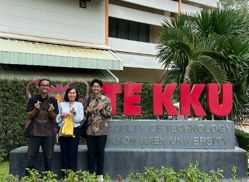
Student mobility programs offer an incredible opportunity to broaden our academic horizons, step out of our comfort zones, and experience new cultures firsthand. For my academic journey, I had the privilege of participating in the TPHP Student Mobility Program. I chose to undertake this program at the Department of Food Technology at the Faculty of Technology, Khon Kaen University in Thailand, dedicating my time abroad to conducting research and writing my final thesis.

I arrived in Khon Kaen on January 12, 2026, accompanied by my good friend and fellow student, Nabil Amali Subandi. Together, we stayed until May 18, 2026, which gave us roughly four unforgettable months in the heart of Thailand’s Isan region. Participating in this program was about much more than just completing a degree requirement; it was about immersing ourselves in a brand-new academic environment, adapting to the warm and welcoming Thai culture, and challenging ourselves to grow both personally and professionally.

Academic Activities
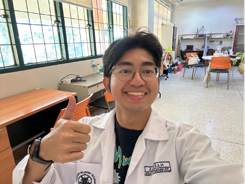
The core focus of my time at Khon Kaen University was centered around my thesis research. Unlike a traditional exchange semester filled with daily classroom lectures, my schedule was packed with laboratory work, data collection, and intensive writing. The facilities provided by the university were outstanding and greatly supported my research needs. Under the guidance of Assoc. Prof. Chanthima Phungamngoen, Ph.D., I was able to gain fresh perspectives on my field of study. Discussing methodologies and sharing insights with Thai academics not only tested my understanding of the research subject but also refined my critical thinking skills. The collaborative and supportive environment at the university was motivating, making the task of writing a thesis feel straightforward.

Non-Academic Activities
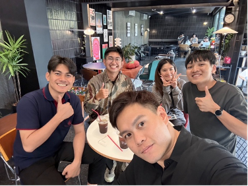
Beyond the laboratory and the library, life in Khon Kaen offered a rich tapestry of experiences. Whenever we needed a break from our research, Nabil and I would explore the local surroundings. We spent our free time discovering the vibrant local night markets, trying authentic local Thai cuisine and soaking in the lively atmosphere of the city. Engaging with local students and other international peers allowed us to build a global network of friends. Whether it was a quick Thai tea break between experiments or visiting nearby cultural sites, every moment outside the campus added to the depth of our cultural exchange.

Benefits
The benefits of this mobility program extend far beyond the completion of my thesis. Academically, it provided me with a platform to conduct my research, utilizing state-of-the-art facilities and learning from international peers. Culturally, it allowed me to immerse myself in Thai traditions and daily life, teaching me adaptability, resilience, and cross-cultural communication. I also learned a great deal of independence and problem-solving. Navigating a new country for four months while managing a heavy research workload requires self-control and determination. Furthermore, the connections I built with my professors and international peers are invaluable networks that I know will benefit my future career and academic endeavors.

Conclusion
In conclusion, the TPHP Student Mobility Program at Khon Kaen University was a truly transformative chapter in my university life. It perfectly bridged the gap between rigorous academic research and profound cultural immersion. The adversity and joy that came my way throughout the program was a perfect combination that created a truly once in a lifetime experience for me. I extend my deepest appreciation to the “Hibah Pertukaran Mahasiswa Internasional untuk Inbound dan Outbound (Skema EQUITY) tahun 2025/2026 Tahap 2” for generously supporting my international mobility program.

Written and Reported by: Geronimo WIrocungkono


Roasting Innovation and Cultural Exchange: A Research Placement at Khon Kaen University, Thailand (2026)

News ReleaseSDG 17: Partnerships for the GoalsSDG 1: No PovertySDG 4: Quality Education Monday, 24 August 2026

International research collaboration offers more than access to a new laboratory and a new set of equipment. It’s also a chance to see how far an idea travels outside the institution where it started. Khon Kaen University in Thailand turned out to be a good place to test that, both academically and personally.

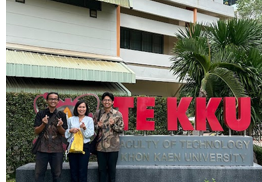
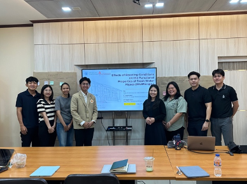
From January 19 to May 18, 2026 I carried out part of my undergraduate thesis research at Khon Kaen University (KKU), Thailand, representing the Department of Food and Agricultural Product Technology (TPHP), Faculty of Agricultural Technology, Universitas Gadjah Mada (UGM). The research looked at how roasting conditions affect the functional properties of Wolffia spp., a freshwater plant often described as among the smallest flowering plants on Earth and was carried out under the joint supervision of Prof. Dr. Ir. Djagal Wiseso Marseno at UGM and Asst. Prof. Peerapong Wongthahan at KKU’s Department of Food Technology, Faculty of Technology. The placement was supported by research funding from the Office of International Affairs (OIA), UGM.

Academic Activities
Most of my working hours were split across several labs under KKU’s Faculty of Technology the Food Processing Laboratory, the Pilot Plant Facility, the Food Microbiology Laboratory, and the Food Engineering Research Center, running a 3×3 factorial roasting experiment (three temperatures, three roasting times) on fresh Wolffia spp. Each roasted sample was then analysed for colour, water solubility and absorption, proximate composition, water activity, antioxidant activity, and taste profile using an electronic tongue. The best-performing condition, 160°C for 10 minutes, became the basis for a roasted, powdered beverage concept I named “Hoji-Pham,” inspired by Japanese hojicha. Working alongside Asst. Prof. Peerapong Wongthahan and his lab group also gave me a closer look at how food research gets done in a different academic system.

Non-Academic Activities
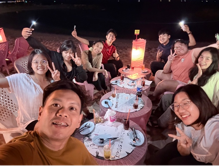
Outside the lab, Khon Kaen kept me fairly busy too. I went to the International Food Festival organised by TE KKU, the Isan Agricultural Fair 2026, and the Jubilee Night Market, and made a habit of jogging around KKU’s campus. My supervisor and a few of the master’s students also walked me around the campus and the surrounding area. A couple of milestones happened along the way I celebrated Eid al-Fitr abroad for the first time, and was in Thailand for Songkran, the Thai New Year celebration. My supervisor and the research team also brought me on a trip to Rayong, and Aj. Nim the supervisor of my fellow UGM student Geronimo, who was doing his own research at KKU at the same time took us to a temple and around some local food spots. Before flying back to Indonesia, I also fit in a short trip to Bangkok.

Benefit
Academically, this placement meant learning new techniques on the spot. Electronic tongue profiling, in particular, was new to me and explaining my experimental choices to a research group outside my usual circle at UGM. Getting feedback from a different research culture pushed the final thesis in directions I don’t think it would have reached otherwise. Settling into a new lab and a new country at the same time took some adjustment, especially around language. Having a Thai mentor made a real difference — for lab conventions, everyday logistics, and the Thai-language conversations I couldn’t quite manage in English on my own. Three months was also long enough to get a feel for daily life in Khon Kaen beyond the lab. The food, the festivals, the general pace of things. Celebrating Eid so far from home for the first time, and being there for Songkran, are two moments from this trip I expect to remember for a long time. I’m also leaving with a working relationship with KKU’s Department of Food Technology that I hope continues beyond this one thesis, Asst. Prof. Peerapong Wongthahan and his research group were generous with their time and equipment throughout.

Closing
Looking back, this placement at KKU shaped both my thesis and a good part of how I think about doing research generally. I’d encourage anyone in TPHP considering a research exchange to take the opportunity seriously. The adjustment takes some effort, but what comes back with you is worth it. I would like to convey my gratitude for “Hibah Pertukaran Mahasiswa Internasional untuk Inbound dan Outbound (Skema EQUITY) tahun 2025/2026 Tahap 2” for supporting my exchange activities.

Written and Reported by: Nabil Amali Subandi


Participation in the Summer Course of Coffee 2024: International Collaboration for Coffee Industry Development and Achieving SDGs

News ReleaseSDG 1: No PovertySDG 5: Gender EqualityUncategorized Friday, 16 August 2024

From August 5 to 14, 2024, Universitas Jember hosted the Summer Course of Coffee 2024, a collaborative program involving various international institutions, including the University of California Davis (UC Davis) and the Indonesian Coffee and Cocoa Research Institute (ICCRI). This program was designed to explore the potential of Indonesian coffee, particularly in the Jember region, and to strengthen the relationship between academics and practitioners in the coffee industry.

The Faculty of Agricultural Technology at Universitas Gadjah Mada sent one of its graduate students in Plantation Products Technology, Rachma Widya Puspita, to participate in this international summer course on coffee. In addition, Universitas Gadjah Mada also sent Dr. Widiastuti Setyaningsih as a mentor for this event, demonstrating UGM’s commitment to supporting academic development and international collaboration.

Opening Ceremony and Educational Visits The activities began with an opening ceremony on August 5, 2024, attended by the Vice Rector of Universitas Jember and representatives from UC Davis. The participants were invited to visit various top facilities at Universitas Jember, including the Center for Development of Advanced Sciences and Technology (CDAST) and Agrotechnopark, where they were introduced to modern agricultural technology and practices applied in coffee and other crop development.

From August 5 to 14, 2024, Universitas Jember hosted the Summer Course of Coffee 2024, a collaborative program involving various international institutions, including the University of California Davis (UC Davis) and the Indonesian Coffee and Cocoa Research Institute (ICCRI). This program was designed to explore the potential of Indonesian coffee, particularly in the Jember region, and to strengthen the relationship between academics and practitioners in the coffee industry.

The Faculty of Agricultural Technology at Universitas Gadjah Mada sent one of its graduate students in Plantation Products Technology, Rachma Widya Puspita, to participate in this international summer course on coffee. In addition, Universitas Gadjah Mada also sent Dr. Widiastuti Setyaningsih as a mentor for this event, demonstrating UGM’s commitment to supporting academic development and international collaboration.

Opening Ceremony and Educational Visits The activities began with an opening ceremony on August 5, 2024, attended by the Vice Rector of Universitas Jember and representatives from UC Davis. The participants were invited to visit various top facilities at Universitas Jember, including the Center for Development of Advanced Sciences and Technology (CDAST) and Agrotechnopark, where they were introduced to modern agricultural technology and practices applied in coffee and other crop development.

Conclusion The Summer Course of Coffee 2024 successfully combined education, research, and practical experience, enriching the participants’ understanding of the coffee industry. Through this international collaboration, Universitas Jember not only strengthened its position as a center of excellence in coffee research but also played an active role in supporting the sustainability and welfare of the coffee farming community in Indonesia. UGM’s participation, both through its mentor and students, is a testament to its commitment to academic development and synergy between educational institutions.


contributor : Rachma Widya Puspita

123…8

Recent Posts

  • Learning Across Cultures at Jeonbuk National University, South Korea
  • Beautiful Learning Journey: A Student Exchange at JBNU, South Korea
  • My Experience at Khon Kaen University (TPHP Student Mobility Program)
  • Roasting Innovation and Cultural Exchange: A Research Placement at Khon Kaen University, Thailand (2026)
  • Participation in the Summer Course of Coffee 2024: International Collaboration for Coffee Industry Development and Achieving SDGs

UGM News

  • UGM Promotes Green Dentistry Through Free Dental Checkups and Oral Health Education
  • UGM Strengthens Its AI Ecosystem Through Multidisciplinary Research and Industry Collaboration
  • UGM Sociologist Calls for Education Reform After School Bombing
  • UGM Student Shines with Double Silver at 2026 National Police Chief Cup Taekwondo Championship
  • Indonesia’s National Education Bill: A Chance to Redefine Education Vision and Governance
Universitas Gadjah Mada

UNIVERSITAS GADJAH MADA
FACULTY OF AGRICULTURAL TECHNOLOGY
Jl. Flora No. 1 Bulaksumur
Yogyakarta, Indonesia 55281
+62 274 589797
+62 274 589797
fateta[at]ugm.ac.id

Faculty Information

  • News Release
  • Event
  • Academic
  • Scholarship
  • Job Vacancy
  • Grant

Department

  • Food and Agricultural Product Technology
  • Agricultural Engineering and Biosystem
  • Agro-industrial Technology

Supporting Units

  • Quality Management Unit
  • Agricultural Technology Career Center

Journals

  • Agritech
  • Agroindustrial Journal
  • Indonesian Food and Nutrition Progress

© 2026 Faculty of Agricultural Technology UGM

SitemapPrivacy PolicyContact

KEBIJAKAN PRIVASI/PRIVACY POLICY

[EN] We use cookies to help our viewer get the best experience on our website. -- [ID] Kami menggunakan cookie untuk membantu pengunjung kami mendapatkan pengalaman terbaik di situs web kami.I Agree / Saya Setuju