• About UGM
  • Academic Portal
  • IT Center
  • Library
  • Research
  • Webmail
  • English
    • Indonesia
    • English
Universitas Gadjah Mada Universitas Gadjah Mada
Faculty of Agricultural Technology
  • Home
  • About Us
    • History of Faculty
    • Vission and Mission
    • Dies Natalis
    • Goals and Objectives
    • Institution Structure
    • Faculty Management
    • Facilities
      • Library
      • Laboratory
    • Lecturer Staff
    • Cooperation
    • Contact
  • Education
    • Department
    • Study Program
    • Graduate & Postgraduate Program
    • Accreditation
    • Academic Calendar
    • SUMMER COURSE
    • Fast Track Program
  • Research
    • Journal
    • Books
  • College Student
    • Information
    • Student Services
    • Student Organizations
    • Internship
    • Scholarship
    • Scholarship for International Student
  • Alumni
    • List of Graduates
    • Career
    • Tracer Study
  • Home
  • News Release
  • (Page 4)
Arsip:

News Release

FTP UGM and Pertamina Develop Sago-Based Drilling Starch to Support Sustainable Energy Industry

News ReleaseSDG 12: Responsible Consumption and ProductionSDG 17: Partnerships for the GoalsSDG 7: Affordable and Clean EnergySDG 9: Industry Innovation and Infrastructure Tuesday, 23 June 2026

The Faculty of Agricultural Technology (FTP ) Universitas Gadjah Mada (UGM), and PT Pertamina (Persero) officially began a research collaboration to develop high-temperature drilling starch based on sago starch, marked by a contract signing and research kick-off on Monday, June 22, 2026, at the Operation Room, FTP UGM. The event was attended by the Vice President of Technology Innovation, Upstream & Low Carbon, PT Pertamina (Persero), Dr. Ali Sundja, representatives from PT Pertamina and the National Research and Innovation Agency (BRIN), and FTP UGM leadership, marking an initial step forward developing more environmentally friendly, locally sourced drilling materials.

Dean of FTP UGM, Prof. Dr. Ir. Eni Harmayani, M.SC., said the collaboration forms part of a broader effort to strengthen impactful research through synergy among universities, industry, and research institutions. According to her, the development of biodegradable drilling additives opens up opportunities to utilize various Indonesian agricultural commodities, including porang and sago, as functional materials that support the needs of the energy industry while increasing the added value of local commodities.

“Research today needs to be driven toward delivering real impact for industry and society. Collaborations like this create an opportunity to produce innovations that are not only scientifically strong, but also applicable and sustainable,” said Prof. Eni.

On the occasion, the research team presented plans for developing chemically modified sago-starch-based drilling starch as fluid loss reducer for high-temperature drilling operations. The research will run for 12 months, focusing on raw-material characterization, modification process optimization, product characterization, drilling-mud formulation testing, and value-added analysis as the basis for scaling up toward industrial production.

BRIN researcher Yanuar Sigit Pramana explained that Indonesia produces around 85 percent of the world’s sago, yet its utilization remains suboptimal due to its relatively low thermal stability. Through this research, sago starch is expected to be upgraded from a natural commodity into a value-added functional material capable of meeting the needs of the domestic drilling industry. 

Beyond supporting the needs of the energy industry, the development of sago-starch-based drilling starch is also expected to reduce dependence on imported materials, strengthen the competitiveness of the national industry, expand the use of sago in non-food sectors, and generated higher economic value for farmers and business in sago-producing regions.

The collaboration between FTP UGM and PT Pertamina (Persero), and BRIN reflects the strengthening of a triple-helix research ecosystem that connects universities, industry, and research institutions in producing innovations ready for downstream commercialization. Through this synergy, the research is expected to generate not only academic output, but also real solutions for a more efficient and sustainable national energy industry.

This activity supports the achievement of the Sustainable Development Goals (SDGs), particularly SDG 9; Industry, Innovation and Infrastructure, through the development of technology based on local resources; SDG 12; Responsible Consumption and Production, through the transformation of sago into a value-added product; SDG 7: Affordable and Clean Energy, through the innovation of more environmentally friendly materials supporting the energy industry, and SDG 17: Partnerships for the Goals, through strategic collaboration among universities, industry, and research institutions.

Handover of FTP UGM Senate Chair and Secretary Marks Faculty Leadership Transition

News ReleaseSDG 4: Quality Education Friday, 19 June 2026

The Faculty of Agricultural Technology (FTP) Universitas Gadjah Mada (UGM), held a Handover of Office ceremony for the Chair and Secretary of the Faculty Senate on Friday, June 19, 2026 at the Operation Room, FTP UGM. The event symbolized a leadership transition as well as the continuity of service in supporting academic governance within FTP UGM.

The handover was carried out through the signing of an official transfer-of-office report, witnessed by faculty leadership and members of the Senate. The signing for the position of Senate Chair was carried out by the Dean of FTP UGM, Prof. Dr. Ir. Eni Harmayani, M.,CS., together with Prof. Dr. Ir. Lilik Sutiarso, M.Eng., and Prof Dr. IR. Umar Santoso, M. Sc., Senate Secretary was carried out by Prof Dr. Ir. Eni Harmayani, M.Sc., together with Prof. Dr. Sri Raharjo, M.Sc., and Prof. Dr. Ir. Bambang Purwantana, M.Agr., outgoing Senate Secretary for the 2021–2026 period. 

On the occasion, FTP UGM also expressed its appreciation and gratitude to Prof. Umar Santoso and Prof. Bambang Purwantana for their dedication and contributions during their tenure as Chair and Secretary of the FTP UGM Senate for the 2021-2026 period. The ideas, policies, and service they provided are expected to serve as foundation for the incoming leadership in supporting the faculty’s continued progress.

The new Chair of the FTP UGM Senate, Prof. Dr. Ir. Lilik Sutiarso, M.Eng., said the leadership transition forms part of an important regeneration process in maintaining organizational continuity and strengthening the role of the Faculty Senate. Under the new leadership, the FTP UGM Senate is expected to continue stengthening synergy among the academic community in supporting the development of education, research, and community service.

The ceremony was carried out solemnly and closed with an expression of gratitude, along with hopes that the new leadership of the FTP UGM Senate help the faculty grow ever more excellent, innovative, and principled.

This activity supports the achievement of the Sustainable Development Goals (SDGs), particularly SDG 4: Quality Education, through the strengthening of academic governance and leadership continuity in support of quality higher-education management at FTP UGM.

Contributor: Shella Herdanti

Participation in the Summer Course of Coffee 2024: International Collaboration for Coffee Industry Development and Achieving SDGs

News ReleaseSDG 1: No PovertySDG 5: Gender EqualityUncategorized Friday, 16 August 2024

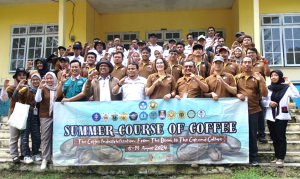
From August 5 to 14, 2024, Universitas Jember hosted the Summer Course of Coffee 2024, a collaborative program involving various international institutions, including the University of California Davis (UC Davis) and the Indonesian Coffee and Cocoa Research Institute (ICCRI). This program was designed to explore the potential of Indonesian coffee, particularly in the Jember region, and to strengthen the relationship between academics and practitioners in the coffee industry.

The Faculty of Agricultural Technology at Universitas Gadjah Mada sent one of its graduate students in Plantation Products Technology, Rachma Widya Puspita, to participate in this international summer course on coffee. In addition, Universitas Gadjah Mada also sent Dr. Widiastuti Setyaningsih as a mentor for this event, demonstrating UGM’s commitment to supporting academic development and international collaboration.
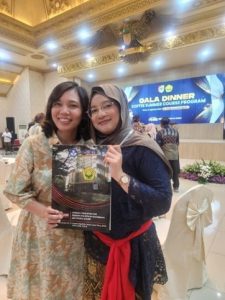
Opening Ceremony and Educational Visits The activities began with an opening ceremony on August 5, 2024, attended by the Vice Rector of Universitas Jember and representatives from UC Davis. The participants were invited to visit various top facilities at Universitas Jember, including the Center for Development of Advanced Sciences and Technology (CDAST) and Agrotechnopark, where they were introduced to modern agricultural technology and practices applied in coffee and other crop development.

From August 5 to 14, 2024, Universitas Jember hosted the Summer Course of Coffee 2024, a collaborative program involving various international institutions, including the University of California Davis (UC Davis) and the Indonesian Coffee and Cocoa Research Institute (ICCRI). This program was designed to explore the potential of Indonesian coffee, particularly in the Jember region, and to strengthen the relationship between academics and practitioners in the coffee industry.

The Faculty of Agricultural Technology at Universitas Gadjah Mada sent one of its graduate students in Plantation Products Technology, Rachma Widya Puspita, to participate in this international summer course on coffee. In addition, Universitas Gadjah Mada also sent Dr. Widiastuti Setyaningsih as a mentor for this event, demonstrating UGM’s commitment to supporting academic development and international collaboration.
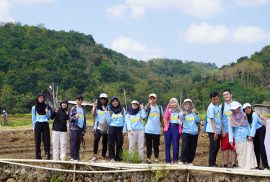
Opening Ceremony and Educational Visits The activities began with an opening ceremony on August 5, 2024, attended by the Vice Rector of Universitas Jember and representatives from UC Davis. The participants were invited to visit various top facilities at Universitas Jember, including the Center for Development of Advanced Sciences and Technology (CDAST) and Agrotechnopark, where they were introduced to modern agricultural technology and practices applied in coffee and other crop development.

Conclusion The Summer Course of Coffee 2024 successfully combined education, research, and practical experience, enriching the participants’ understanding of the coffee industry. Through this international collaboration, Universitas Jember not only strengthened its position as a center of excellence in coffee research but also played an active role in supporting the sustainability and welfare of the coffee farming community in Indonesia. UGM’s participation, both through its mentor and students, is a testament to its commitment to academic development and synergy between educational institutions.


contributor : Rachma Widya Puspita

Exploring Traditional Agriculture and Culture: Field Trip to Selopamioro Village

News ReleaseSDG 15: Life on LandSDG 2: Zero Hunger Tuesday, 13 August 2024

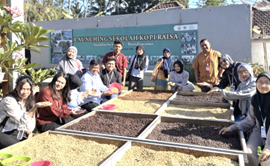
The field trip began with students boarding two buses. Our first stop was near Selopamioro to pick up snacks, which included sweet potatoes, krupuk-like snacks made from potatoes, pudding, and a type of bread with cheese. The variety of flavors was interesting, and the iced tea was refreshing.

After enjoying the beautiful scenic views of Bantul along with our snacks, we arrived at the main crop fields. There, we saw farmers and vast fields ready for planting seeds. We were divided into two groups: Group 1 consisted of participants from Groups 1, 3, and 5, while Group 2 included those from Groups 2, 4, and 6. Each group was guided by a local farmer to plant onions.

The land was in good condition, and we were instructed to plant eight onions in a single line, leaving about 10 centimeters between each one. It was a fascinating experience, and we bonded well while learning words from different languages. One interesting aspect of the local culture was their practice of sharing water ponds and farming tools.

We also observed the water reserves, where rainwater collected from higher elevations is used for farming. The system can be utilized during dry spells, thanks to an IoT-based rain calculation system installed by FTP UGM. This system helps farmers predict rainfall adequacy for crops and manage irrigation efficiently. While gravity mainly transports water, diesel pumps are gradually being replaced by electric ones to reduce costs. Previously, farmers could only harvest once a year, but now, with these practices, they can cultivate paddy and tobacco twice a year.

During the field trip, an interview was conducted with Pak Tuh Gimin, a local farmer. Pak Tuh Gimin has three children, all of whom are married and also work as farmers. His farming group manages a total of 120 hectares of land, which is divided among the members, with each receiving around 1,000 square meters, though the exact amount can vary.

According to Pak Tuh Gimin, the farming schedule is as follows:

  • September, October, November: Vegetable season (“sayur”).
  • January, February, March, April: Paddy season.
  • April, May, June: Red onion (“bawang merah”) season.

This seasonal rotation allows the farmers to maximize the productivity of their land throughout the year.

After leaving the farm with wonderful memories, we arrived at Sekolah Sungai Siluk, where we had lunch. We then participated in an engaging gamelan class. The participants quickly learned to synchronize their playing, which was impressive.

We have gamelan class that we find interesting. We learned a lot about tempo, music note, and we learned how to play gamelan. At first it was hard to play. but after some adjustment gamelan seems so interesting and became a cool stuff we learned here. Also, gamelan is one of the most famous traditional music in Indonesia. We played a ‘gugur gunung’ song.

After the gamelan class, we made Es Telang, a drink made with Telegah flowers, coconut jelly, lychee jelly, basil seeds, ice, and lemon. The Telang flower comes in three colors: blue, pink, and white. It is easy to grow and offers numerous health benefits, such as being an antioxidant and helping with eye infections, inflammation, diabetes, and cholesterol. The flower is also known for its anti-aging properties. A fascinating feature is its color-changing ability when lemon is added: the blue flower turns purple, the pink turns blue, and the white remains unchanged.

The Telang flower is abundant in Selopamioro village, and FTP UGM has collaborated with the community to promote its benefits. The drink is easy to make and rejuvenating. I hope to try the Es Telang Herbal one day, as I am curious about its taste, which includes different ingredients. Typically, two to three flowers are needed to make 250 ml of water, and they can be either boiled in water or added to boiling water.

After enjoying the Es Telang, we boarded the buses for the journey back to FTP UGM.

Final Presentation, Cultural Exchange and Farewell Celebration

News ReleaseSDG 10: Reduced InequalitiesSDG 17: Partnerships for the GoalsSDG 4: Quality Education Sunday, 11 August 2024

This morning, August 10th 2024, at 08.00 Western Indonesia Time (GMT+7), marked the 12th day (last day) of the Summer Course (SC) 2024 held by the Faculty of Agricultural Technology, Universitas Gadjah Mada.

At 08.00 the participants should submit their final presentation worked in a group. There are 6 on-site groups and 9 online groups. The presentation session was held in 3 classes namely 1.02, 1.03, 1.04. Each class consists of 2 on-site groups and 3 online groups as well as 2 reviewers. The on-site presentation was about a field trip and the online presentation was about a group project. The presentation time for each group was around 15 minutes (10 minute presentation, 5 minute feedback from reviewer) It started at 10.00 until 12.00 after coffee break.   

The next agenda was lunch break until 13.00. After that, the participants prepared themselves for the closing ceremony and country performance. Around 15.00 all participants gather in FAT Convention Hall to attend the closing ceremony including Dean of Faculty of Agricultural Technology, Universitas Gadjah Mada, Prof. Dr. Eni Harmayani, representative of Directorate of Partnerships and Global Relations UGM, Dr. Wiratni, Vice Dean for Academic and Student Affairs, Prof. Dr. Yudi Pranoto, Vice Dean for Finance, Assets, Human Resources, and Information System, Prof. Dr. Kuncoro Harto Widodo, Vice Dean for Research, Community Services, Cooperation, and Alumni, Dr. Sri Rahayoe, chairman of the 6th summer course Faculty of Agricultural Technology, UGM, Dr. Agung Putra Pamungkas, Head of Department, Secretary of Department, and Head of Study Program, of Faculty of Agricultural Technology UGM, all lecturers of Faculty of Agricultural Technology, UGM and all the speakers and the participants of The 6th Summer Course Program

The first speech was from The Chairman of the 6th summer course to address the closing remark. Please welcome Dr. Agung Putra. Followed by the next was Dr. Wiratni, the Secretary of the Directorate of Partnerships and Global Relations UGM. And the last speech was from The Dean of The Faculty of Agricultural Technology , UGM Prof. Eni Harmayani to give a closing speech and to officially close the 6th Summer Course

An award was given to Muna from Thailand and Arun from Indonesia as the best participants of Summer Course FAT UGM 2024. Then, there were performances from each country. Thailand presented dancing, Philippines presented singing and dancing, Pakistan presented storytelling about culture, Bangladesh presented poem reading, Madagascar presented couple dancing and singing, Egypt and Yemen presented cultural video and singing lastly Indonesia presented dancing “poco-poco”. After all the participants performed, The best performance went to Madagascar, The Philippines, and Thailand. The session was closed by photo session 

123456…11

Recent Posts

  • Three DTPB FTP UGM Study Programs Secure ASIIN International Accreditation Through 2030
  • Dari Benih hingga Lahan, FTP UGM dan Sang Hyang Seri Kembangkan Teknologi Pertanian Berbasis Data
  • Learning Across Cultures at Jeonbuk National University, South Korea
  • Beautiful Learning Journey: A Student Exchange at JBNU, South Korea
  • My Experience at Khon Kaen University (TPHP Student Mobility Program)

UGM News

  • IHSG Drop After MSCI Proposal Highlights Need for Capital Market Reform
  • Indonesia Needs Greater Stock Market and Share Ownership Transparency
  • UGM Inaugurates 61 New Doctors, Emphasizes Professional Ethics and Service
  • UGM Explores New Research and Education Partnerships with Two Leading Chinese Universities
  • Local Knowledge Plays a Key Role in Understanding Intergenerational Conflict Trauma
Universitas Gadjah Mada

UNIVERSITAS GADJAH MADA
FACULTY OF AGRICULTURAL TECHNOLOGY
Jl. Flora No. 1 Bulaksumur
Yogyakarta, Indonesia 55281
+62 274 589797
+62 274 589797
fateta[at]ugm.ac.id

Faculty Information

  • News Release
  • Event
  • Academic
  • Scholarship
  • Job Vacancy
  • Grant

Department

  • Food and Agricultural Product Technology
  • Agricultural Engineering and Biosystem
  • Agro-industrial Technology

Supporting Units

  • Quality Management Unit
  • Agricultural Technology Career Center

Journals

  • Agritech
  • Agroindustrial Journal
  • Indonesian Food and Nutrition Progress

© 2026 Faculty of Agricultural Technology UGM

SitemapPrivacy PolicyContact

KEBIJAKAN PRIVASI/PRIVACY POLICY

[EN] We use cookies to help our viewer get the best experience on our website. -- [ID] Kami menggunakan cookie untuk membantu pengunjung kami mendapatkan pengalaman terbaik di situs web kami.I Agree / Saya Setuju