• About UGM
  • Academic Portal
  • IT Center
  • Library
  • Research
  • Webmail
  • English
    • Indonesia
    • English
Universitas Gadjah Mada Universitas Gadjah Mada
Faculty of Agricultural Technology
  • Home
  • About Us
    • History of Faculty
    • Vission and Mission
    • Dies Natalis
    • Goals and Objectives
    • Institution Structure
    • Faculty Management
    • Facilities
      • Library
      • Laboratory
    • Lecturer Staff
    • Cooperation
    • Contact
  • Education
    • Department
    • Study Program
    • Graduate & Postgraduate Program
    • Accreditation
    • Academic Calendar
    • SUMMER COURSE
    • Fast Track Program
  • Research
    • Journal
    • Books
  • College Student
    • Information
    • Student Services
    • Student Organizations
    • Internship
    • Scholarship
  • Alumni
    • List of Graduates
    • Career
    • Tracer Study
  • Home
  • Post by
Post by :

luqlun.ma

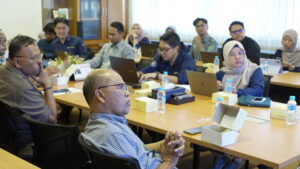
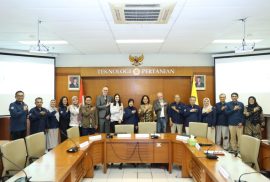
Pertemuan Tim Asesor ASIIN dengan Pimpinan Fakultas Teknologi Pertanian UGM dan Pengurus Departemen Teknik Pertanian dan Biosistem UGM, 4-5 Februari 2025

Three DTPB FTP UGM Study Programs Secure ASIIN International Accreditation Through 2030

News ReleaseSDG 17: Partnerships for the GoalsSDG 4: Quality EducationSDG 9: Industry Innovation and Infrastructure Thursday, 10 September 2026

The Faculty of Agricultural Technology (FTP), Universitas Gadjah Mada (UGM), has once again recorded an achievement at the international level. Three study programs within the Department of Agricultural and Biosystem Engineering (DTPB) the Undergraduate Study Program in Agricultural Engineering, the Master’s Study Program in Agricultural Engineering, and the Doctoral Study Program in Agricultural Engineering Science have officially obtained full ASIIN International Accreditation (Akkreditierungsagentur für Studiengänge der Ingenieurwissenschaften, der Informatik, der Naturwissenschaften und der Mathematik), valid from June 17, 2025, to September 30, 2030. This was announced through a letter from UGM’s Vice-Rector for Education and Teaching dated July 20, 2026, confirming that all three study programs had met the full requirements of ASIIN’s international accreditation.

The achievement is the result of a series of assessment processes that began with a visit from the ASIIN assessor team on February 4–5, 2025. During this process, the assessor team comprising academics and ASIIN representatives conducted a comprehensive evaluation of the education delivered by the Undergraduate Study Program in Agricultural Engineering, the Master’s Study Program in Agricultural Engineering, and the Doctoral Study Program in Agricultural Engineering Science.

During the visit, the assessor team held discussions with UGM leadership, FTP UGM leadership, the management of the Department of Agricultural and Biosystem Engineering, lecturers, students, alumni, and industry partners. The assessment covered a wide range of aspects, from curriculum, the learning process, and study-program governance to human-resource development, partnerships with external collaborators, and alumni involvement in supporting the improvement of education quality.

In addition to holding discussions, the assessor team also reviewed various learning-support facilities owned by UGM, including health facilities, sports facilities, disability services, student dormitories, and the Gelanggang Inovasi dan Kreativitas (Innovation and Creativity Hub/GIK). Within the Department of Agricultural and Biosystem Engineering, the assessors visited five laboratories the Land and Water Resources Engineering Laboratory, the Agricultural Energy and Machinery Laboratory, the Food and Postharvest Engineering Laboratory, the Biophysics Laboratory, and the Environmental Engineering for Agricultural Buildings Laboratory to evaluate the completeness of facilities, laboratory capability, and occupational safety aspects.

In the closing session of the visit, the Chair of the ASIIN Assessor Team, Prof. Dr. Dieter Trautz of Osnabrück University of Applied Sciences, expressed his appreciation for the readiness shown by all three study programs throughout the assessment process. The series of evaluations reflects the commitment of FTP UGM’s Department of Agricultural and Biosystem Engineering to maintaining and improving the quality of higher education in line with international standards.

The award of ASIIN international accreditation stands as recognition of the quality of education delivered by FTP UGM’s Department of Agricultural and Biosystem Engineering, while also reinforcing the faculty’s commitment to producing graduates who are competitive at the global level. The achievement is also expected to further expand opportunities for international collaboration, student and lecturer mobility, and the development of competitive education and research.

This achievement also supports the Sustainable Development Goals (SDGs), particularly SDG 4: Quality Education, through the strengthening of higher-education quality that meets international standards; SDG 9: Industry, Innovation and Infrastructure, through improved engineering-education quality that supports innovation; and SDG 17: Partnerships for the Goals, through the strengthening of international networks and recognition in higher-education development.

Contributor: Bernadetta Shella
Dari Benih hingga Lahan, FTP UGM dan Sang Hyang Seri Kembangkan Teknologi Pertanian Berbasis Data

Uncategorized Friday, 28 August 2026

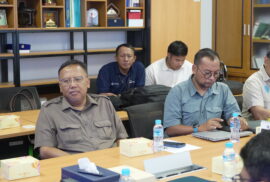
Fakultas Teknologi Pertanian (FTP) Universitas Gadjah Mada (UGM) dan PT Sang Hyang Seri (Persero) menindaklanjuti kerja sama penelitian dan pengembangan teknologi pertanian tanaman pangan melalui pembahasan pengembangan teknologi deteksi kualitas benih berbasis X-ray dan sistem pemetaan pertanian menggunakan drone dalam kunjungan kerja Direksi PT Sang Hyang Seri ke Departemen Teknik Pertanian dan Biosistem (TPB) FTP UGM, Rabu (26/8/2026). Pertemuan yang berlangsung di Ruang Sidang Departemen TPB tersebut menjadi forum untuk membahas progres dua proposal kerja sama sekaligus mengidentifikasi kebutuhan teknologi pertanian di lapangan.

Kerja sama ini menarik karena riset yang dibahas tidak berhenti pada pengembangan teknologi di tingkat laboratorium. Dua proposal yang dipaparkan FTP UGM diarahkan untuk menjawab kebutuhan nyata PT Sang Hyang Seri, mulai dari bagaimana mendeteksi kualitas benih secara cepat hingga bagaimana menghasilkan rekomendasi pengelolaan lahan berdasarkan data kondisi lapangan.
Dalam pertemuan tersebut, Dr. Bayu Nugraha memaparkan proposal Evaluasi Kualitas Benih Padi dan Kedelai Menggunakan Teknologi X-Ray. Proposal tersebut disusun berdasarkan kebutuhan PT Sang Hyang Seri untuk memiliki laboratorium pendeteksi benih dari pihak eksternal. Teknologi X-ray yang dikembangkan diarahkan untuk menghasilkan desain alat yang dapat membantu mendeteksi kerusakan benih secara cepat.

Sementara itu, Dr. Andri Prima Nugroho memaparkan proposal Pengembangan Sistem Pemetaan UAV VTOL, AI Pipeline, Treatment Map dan Zonasi Mekanisasi pada Area Produksi PT Sang Hyang Seri (Persero). Proposal ini berangkat dari temuan permasalahan pada kegiatan on-farm, khususnya dalam aspek budidaya dan mekanisasi.

Melalui pengembangan drone, kondisi lahan dapat dievaluasi dan diolah menjadi informasi yang mendukung pengelolaan pertanian. Salah satu keluaran yang ditargetkan adalah peta rekomendasi pemupukan, yang dapat menjadi dasar dalam menentukan perlakuan sesuai kondisi lapangan. Pengembangan tersebut juga mencakup aspek manajemen agronomi dan mekanisasi pertanian yang ditawarkan dalam dua paket kerja sama.

Kolaborasi ini juga dirancang membuka ruang pembelajaran langsung bagi mahasiswa. Ke depan, mahasiswa Program Profesi Insinyur direncanakan melaksanakan kerja praktik di PT Sang Hyang Seri sekaligus membantu menambah data yang dibutuhkan dalam pengembangan sistem drone. Dengan demikian, kerja sama tidak hanya mempertemukan kebutuhan industri dengan kepakaran akademik, tetapi juga memberikan ruang bagi mahasiswa untuk terlibat dalam penyelesaian persoalan teknologi pertanian secara langsung.

Berdasarkan temuan tersebut, FTP UGM mengidentifikasi kebutuhan pengembangan mekanisme untuk meningkatkan kualitas pengukuran kadar air agar memperoleh hasil yang lebih presisi. Perbaikan juga diperlukan pada tungku biomassa untuk mengatasi aliran panas yang masih banyak mengalami kebocoran. Hal ini sejalan dengan mandat FTP UGM dari Kementerian Pertanian sebagai salah satu laboratorium pengujian alat dan mesin pertanian (alsintan) di Indonesia yang mencakup bidang prapanen, pascapanen, hingga pengolahan.

Dari sisi PT Sang Hyang Seri, diskusi turut membuka sejumlah peluang pengembangan teknologi lainnya. Beberapa masukan yang disampaikan mencakup pengembangan sistem Alternate Wetting and Drying (AWD) dengan dukungan teknologi satelit, rencana pembangunan greenhouse di Jakarta, serta pengecekan sistem traceability produk.

Untuk traceability, Departemen TPB FTP UGM sebelumnya telah mengembangkan sistem serupa untuk komoditas kopi dan kakao dengan memanfaatkan desain aplikasi. Pengalaman tersebut menjadi salah satu dasar yang dapat dikembangkan lebih lanjut sesuai kebutuhan PT Sang Hyang Seri.

Berbagai topik yang dibahas menunjukkan bahwa ruang kolaborasi FTP UGM dan PT Sang Hyang Seri terbuka dari hulu hingga hilir. Pengembangan teknologi tidak hanya menyasar mutu benih sebelum budidaya, tetapi juga pemetaan dan pengelolaan lahan, mekanisasi, pengeringan, pengolahan hasil, hingga ketertelusuran produk.

Pertemuan yang berlangsung sekitar dua jam tersebut mempertemukan jajaran Direksi PT Sang Hyang Seri, peneliti, dosen, dan pimpinan FTP UGM dalam diskusi mengenai arah pengembangan kerja sama. Direksi PT Sang Hyang Seri dipimpin Direktur Utama Adhi Cahyono Nugroho, bersama Prof. Dr. Inex Slamet-Loedin, Agustinus Budi S., Jupebi Purnomo Wilianto, Asokawati Dyah Meirina, dan Gabriella Margaretha Putri Bettay. Dari FTP UGM, pertemuan dihadiri Dekan FTP UGM beserta jajaran pimpinan dan tim peneliti Departemen TPB.

Melalui tindak lanjut kerja sama ini, FTP UGM dan PT Sang Hyang Seri tidak sekadar membahas pengembangan teknologi, tetapi berupaya mempertemukan kepakaran akademik dengan kebutuhan nyata industri pertanian. Dari teknologi X-ray untuk membaca mutu benih hingga drone yang memetakan kebutuhan lahan, kolaborasi tersebut membuka peluang untuk menghadirkan teknologi yang lebih berbasis data dan dapat diterapkan dalam sistem pertanian tanaman pangan.

Kegiatan ini turut mendukung pencapaian Sustainable Development Goals (SDGs), yaitu SDG 2: Tanpa Kelaparan melalui pengembangan teknologi yang mendukung produktivitas dan kualitas pangan; SDG 9: Industri, Inovasi dan Infrastruktur melalui riset dan pengembangan teknologi pertanian; serta SDG 17: Kemitraan untuk Mencapai Tujuan melalui penguatan kolaborasi antara perguruan tinggi dan industri dalam menjawab tantangan sektor pertanian.

Learning Across Cultures at Jeonbuk National University, South Korea

News ReleaseSDG 17: Partnerships for the GoalsSDG 1: No PovertySDG 4: Quality Education Monday, 24 August 2026

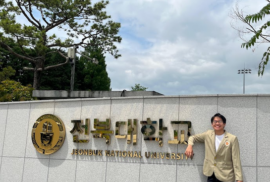
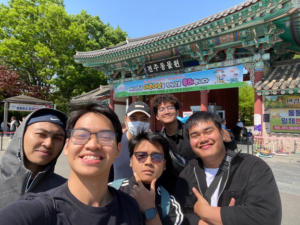
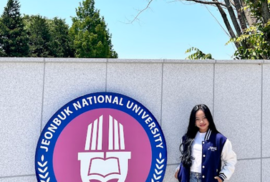
A student exchange at Jeonbuk National University (JBNU), South Korea, was part of my academic experience as a 2023 student of Agricultural Engineering at the Faculty of Agricultural Technology, Universitas Gadjah Mada. During the program, courses were taken at the Department of Bioindustrial Machinery Engineering, with the exchange running from February 28 to June 19, 2026.

The courses included Energy and Environment Technology, New Energy Industry, Food Microbiology, Mental Health Problem, Environment and Health in Modern Korea, and Korean Reading. The subjects covered a range of topics, from energy and environmental technology to food microbiology and Korean language. Several of these topics were also related to Agricultural Engineering, particularly those concerning energy, food, and the environment.

The academic environment at JBNU was different from the one at UGM. Classes, assignments, and daily routines required some adjustment. Having students from different backgrounds in the same learning environment also created opportunities to communicate and get to know people with different experiences.

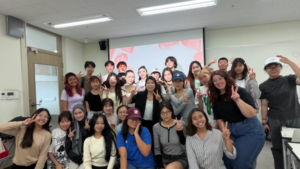
Outside the classroom, getting to know local students became part of everyday life at JBNU. Conversations often covered university life, studies, and differences between living in Indonesia and Korea. These interactions made it easier to become familiar with the campus environment and daily life in Korea.

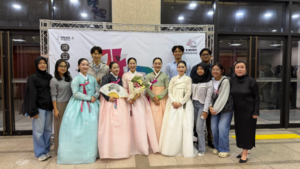
One of the campus activities was the school festival. Various activities were organized by the students, creating a more relaxed atmosphere around the university. Spending time at the festival with friends and other students was a nice break from regular classes.

During the exchange period, Eid al-Fitr was also celebrated at the Embassy of the Republic of Indonesia (KBRI) in South Korea. Being away from home during Eid made the gathering especially nice. Meeting other Indonesians, having meals together, and talking about life in Korea brought a familiar atmosphere during the holiday.

A visit to a paper-making museum was another activity outside the university. The visit introduced the traditional process of paper making, including the tools and techniques used. It was an interesting way to see a part of Korean traditional craft firsthand.

Living in Korea for several months also meant getting used to everyday things, from navigating a different academic schedule to communicating in a new environment and managing daily activities independently. These experiences became part of the routine throughout the exchange.

The courses at the Department of Bioindustrial Machinery Engineering also offered a different perspective on topics related to Agricultural Engineering. Energy, environmental technology, and food were approached from an engineering perspective, which helped connect the courses at JBNU with the field of study at UGM.

The exchange period at JBNU brought together regular academic activities with everyday experiences outside the classroom. Classes, conversations with local students, campus events, Eid at the KBRI, and visits to places such as the paper-making museum were all part of the four months spent studying in South Korea.

This international exchange was made possible through the generous funding of the “Hibah Pertukaran Mahasiswa Internasional untuk Inbound dan Outbound (Skema EQUITY) tahun 2025/2026 Tahap 2”, for which I am profoundly grateful.

Written and Reported by: Syrin Alia Zahra Marin

Beautiful Learning Journey: A Student Exchange at JBNU, South Korea

News ReleaseSDG 17: Partnerships for the GoalsSDG 1: No PovertySDG 4: Quality Education Monday, 24 August 2026

Ever since I started enrolling in my bachelor’s degree at Universitas Gadjah Mada, I have dreamt of joining a student exchange program with one of UGM’s partner universities in developed countries. Studying abroad will allow university students like me to gain new perspectives on the world, broaden our cultural knowledge, and experience a new educational environment.

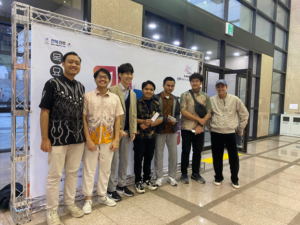
South Korea has been one of the top study destinations for students worldwide, with more than 30 of its universities in the global top 1000. One of South Korea’s finest universities is Jeonbuk National University (JBNU), located in Jeonju. JBNU has been collaborating with Universitas Gadjah Mada for years and has consistently offered a 1-semester student exchange program for UGM students. Every year, they provide 2 opportunities for international students to study at their university, which are carried out in the spring and fall periods. This time, I joined JBNU’s Spring 2026 student exchange program that ranges from February 27th to June 20th, 2026, which is equivalent to approximately four months’ worth of time. I was joined by 24 other UGM students from different faculties, all with the same spirit, excited to embark on a new adventure in South Korea.

This program includes a variety of different activities, some of which are academic and some of which are not academic. Aside from that, this program also results in positive aspects that can be taken, such as the positive culture or habits of the Korean people. Some habits I learned from my Korean friends is they are disciplined about time and have strong determination in their work/study.

JBNU provides a lot of wonderful facilities that exchange students like me can use and enjoy. An adequate dormitory, dining hall, beautiful football and track fields, and lots of jogging and cycling tracks. Students also get access to academic accounts at JBNU, a variety of tours that are facilitated by JBNU, and a selection of insurance options. This program alone offers a scholarship that covers almost 50% of the dormitory and weekday meals’ cost. Universitas Gadjah Mada, through the Directorate of Partnerships and Global Relations (DKRG), also gives a chance for outgoing students to get a scholarship that will cover administrative costs and the remaining living expenses.

Academic Activities
The academic activities offered are in the form of lectures; exchange students can take up to 18 credits, excluding Korean language classes. I took a total of 18 credits, which are classes related to my major, which is food technology, and the Korean language class too.

Non-Academic Activities
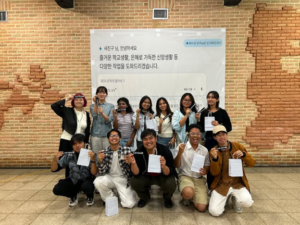
Besides schoolwork, I enjoy participating in student clubs like the international community club and a Christian students community. I made a lot of new Korean friends, as well as other international friends. In that period of time, I joined international gatherings, picnics, and other cultural events.

Benefits
Learning Korean culture is really an eye-opening experience, and it’s one of the most important benefits that I got during my 4-month student exchange program. Before going to Korea, I really had no clue about Korean culture. I just knew that South Korea has a really wonderful and special culture that made people worldwide fans of it. The fact that I got the chance to study and spend 4 months of my life in South Korea taught me a lot about life. I had the opportunity to experience the study life in a developed country, participating in cultural activities, and socializing with new friends from different countries. This experience allowed me to reflect more on life and also gain a deeper understanding of life in a beautiful developed country.

The other great benefit that I got from joining this program is that I got a chance to develop my language-learning skills. From the first time I got the news that I got accepted into this program, I started learning the Korean language. I was and am eager to learn a new language, and learning Korean was a very fun learning experience. Learning a language while being in the country allowed me to study the language very fast and enjoy the learning process, especially by talking to my Korean friends.

Koreans are also famous for their hardworking and discipline attributes. Being a student at a Korean university teaches me that hard work is an important trait that students should have. My lecturers and my Korean friends are also really discipline about time, and it taught me a lot about how to be a better person. These traits are really crucial, especially for a university student who will enter the “real” world when we are working later.

Last but not least, the friendships I made along the way are the things I will never forget, and I will hold dearly close to my heart forever. I was able to make a lot of new friends, especially from the Christian community club, that I will never forget. They welcomed me and my friends, and helped us a lot in adapting to Korean life. I am really grateful for them, and will definitely keep in touch with all of my Korean close friends.

In conclusion, my student exchange program in South Korea was an exceptional experience that offered a lot of useful benefits. I was able to learn about a new culture, gain language skills, and develop special friendships. I highly recommend this experience to anyone who dreams of joining a student exchange program to South Korea. Special thanks to the “Hibah Pertukaran Mahasiswa Internasional untuk Inbound dan Outbound (Skema EQUITY) tahun 2025/2026 Tahap 2” for funding and supporting this exchange program.

Written and Reported by: Gabriel Kristano

My Experience at Khon Kaen University (TPHP Student Mobility Program)

News ReleaseSDG 17: Partnerships for the GoalsSDG 1: No PovertySDG 4: Quality Education Monday, 24 August 2026

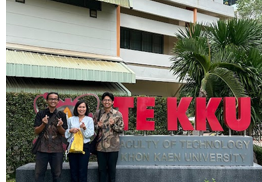
Student mobility programs offer an incredible opportunity to broaden our academic horizons, step out of our comfort zones, and experience new cultures firsthand. For my academic journey, I had the privilege of participating in the TPHP Student Mobility Program. I chose to undertake this program at the Department of Food Technology at the Faculty of Technology, Khon Kaen University in Thailand, dedicating my time abroad to conducting research and writing my final thesis.

I arrived in Khon Kaen on January 12, 2026, accompanied by my good friend and fellow student, Nabil Amali Subandi. Together, we stayed until May 18, 2026, which gave us roughly four unforgettable months in the heart of Thailand’s Isan region. Participating in this program was about much more than just completing a degree requirement; it was about immersing ourselves in a brand-new academic environment, adapting to the warm and welcoming Thai culture, and challenging ourselves to grow both personally and professionally.

Academic Activities
The core focus of my time at Khon Kaen University was centered around my thesis research. Unlike a traditional exchange semester filled with daily classroom lectures, my schedule was packed with laboratory work, data collection, and intensive writing. The facilities provided by the university were outstanding and greatly supported my research needs. Under the guidance of Assoc. Prof. Chanthima Phungamngoen, Ph.D., I was able to gain fresh perspectives on my field of study. Discussing methodologies and sharing insights with Thai academics not only tested my understanding of the research subject but also refined my critical thinking skills. The collaborative and supportive environment at the university was motivating, making the task of writing a thesis feel straightforward.

Non-Academic Activities
Beyond the laboratory and the library, life in Khon Kaen offered a rich tapestry of experiences. Whenever we needed a break from our research, Nabil and I would explore the local surroundings. We spent our free time discovering the vibrant local night markets, trying authentic local Thai cuisine and soaking in the lively atmosphere of the city. Engaging with local students and other international peers allowed us to build a global network of friends. Whether it was a quick Thai tea break between experiments or visiting nearby cultural sites, every moment outside the campus added to the depth of our cultural exchange.

Benefits
The benefits of this mobility program extend far beyond the completion of my thesis. Academically, it provided me with a platform to conduct my research, utilizing state-of-the-art facilities and learning from international peers. Culturally, it allowed me to immerse myself in Thai traditions and daily life, teaching me adaptability, resilience, and cross-cultural communication. I also learned a great deal of independence and problem-solving. Navigating a new country for four months while managing a heavy research workload requires self-control and determination. Furthermore, the connections I built with my professors and international peers are invaluable networks that I know will benefit my future career and academic endeavors.

Conclusion
In conclusion, the TPHP Student Mobility Program at Khon Kaen University was a truly transformative chapter in my university life. It perfectly bridged the gap between rigorous academic research and profound cultural immersion. The adversity and joy that came my way throughout the program was a perfect combination that created a truly once in a lifetime experience for me. I extend my deepest appreciation to the “Hibah Pertukaran Mahasiswa Internasional untuk Inbound dan Outbound (Skema EQUITY) tahun 2025/2026 Tahap 2” for generously supporting my international mobility program.

Written and Reported by: Geronimo WIrocungkono


123…8

Recent Posts

  • Three DTPB FTP UGM Study Programs Secure ASIIN International Accreditation Through 2030
  • Dari Benih hingga Lahan, FTP UGM dan Sang Hyang Seri Kembangkan Teknologi Pertanian Berbasis Data
  • Learning Across Cultures at Jeonbuk National University, South Korea
  • Beautiful Learning Journey: A Student Exchange at JBNU, South Korea
  • My Experience at Khon Kaen University (TPHP Student Mobility Program)

UGM News

  • UGM’s Youngest Doctoral Graduate Advances Native Chicken Genetics
  • UGM and NTU Host ASEAN Summer School on Renewable Energy and Smart Cities
  • BSI Scholarship Helps First-Generation Student Silvia Study Chemistry at UGM
  • Black Aromatic Ginger and Gotu Kola: UGM Study Finds Potential Herbal Therapy for Optic Nerve Inflammation
  • UGM Promotes Green Dentistry Through Free Dental Checkups and Oral Health Education
Universitas Gadjah Mada

UNIVERSITAS GADJAH MADA
FACULTY OF AGRICULTURAL TECHNOLOGY
Jl. Flora No. 1 Bulaksumur
Yogyakarta, Indonesia 55281
+62 274 589797
+62 274 589797
fateta[at]ugm.ac.id

Faculty Information

  • News Release
  • Event
  • Academic
  • Scholarship
  • Job Vacancy
  • Grant

Department

  • Food and Agricultural Product Technology
  • Agricultural Engineering and Biosystem
  • Agro-industrial Technology

Supporting Units

  • Quality Management Unit
  • Agricultural Technology Career Center

Journals

  • Agritech
  • Agroindustrial Journal
  • Indonesian Food and Nutrition Progress

© 2026 Faculty of Agricultural Technology UGM

SitemapPrivacy PolicyContact

KEBIJAKAN PRIVASI/PRIVACY POLICY

[EN] We use cookies to help our viewer get the best experience on our website. -- [ID] Kami menggunakan cookie untuk membantu pengunjung kami mendapatkan pengalaman terbaik di situs web kami.I Agree / Saya Setuju