• About UGM
  • Academic Portal
  • IT Center
  • Library
  • Research
  • Webmail
  • English
    • Indonesia
    • English
Universitas Gadjah Mada Universitas Gadjah Mada
Faculty of Agricultural Technology
  • Home
  • About Us
    • History of Faculty
    • Vission and Mission
    • Dies Natalis
    • Goals and Objectives
    • Institution Structure
    • Faculty Management
    • Facilities
      • Library
      • Laboratory
    • Lecturer Staff
    • Cooperation
    • Contact
  • Education
    • Department
    • Study Program
    • Graduate & Postgraduate Program
    • Accreditation
    • Academic Calendar
    • SUMMER COURSE
    • Fast Track Program
  • Research
    • Journal
    • Books
  • College Student
    • Information
    • Student Services
    • Student Organizations
    • Internship
    • Scholarship
    • Scholarship for International Student
  • Alumni
    • List of Graduates
    • Career
    • Tracer Study
  • Home
  • Post by
Post by :

fadlifitriandikusumantoro

Srawung Desa 2026: Nurturing Creativity and Empowerment with the Gondoarum Community

News ReleaseSDG 11: Sustainable Cities and CommunitiesSDG 17: Partnerships for the GoalsSDG 4: Quality Education Saturday, 15 August 2026

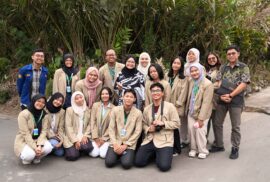
Learning from the community, identifying village potential, and sharing knowledge were among the spirits embodied in the 63rd Anniversary of the Faculty of Agricultural Technology (FTP), Universitas Gadjah Mada (UGM). This spirit was brought to life through Srawung Desa 2026, themed “Semai Karya, Cipta Berdaya” (Nurturing Creativity, Creating Empowerment), held from 13–15 August 2026 in Gondoarum Hamlet, Wonokerto Village, Turi District, Sleman Regency.

The program brought together students from FTP and several other faculties at UGM with the Gondoarum community through a series of empowerment activities, workshops, as well as social and cultural activities.

Chair of the 63rd Anniversary Committee of FTP UGM, Dr. Novita Erma Kristanti, S.T.P., M.P., said that direct interaction with the community is an important part of the student development process. According to her, students need to develop social awareness and understand that learning does not take place only in the classroom. “One of the things we hope is that our UGM students will grow through this process. What do we expect? We hope they develop a strong sense of social awareness.

“Oh, it turns out that engaging with the community is not a one-way process. I have knowledge from campus, but that does not mean I should communicate as if I know more. The fathers and mothers here have far greater life experience. So, we will learn a great deal here.”

This message became one of the foundations of Srawung Desa 2026. Students were not positioned merely as parties bringing knowledge from the university, but also as learners who were open to the experiences, knowledge, and everyday lives of the community. This two-way interaction was expected to foster greater sensitivity while encouraging students to view the potential and challenges of the village from a perspective that is closer to the community’s daily realities.

Chair of the FTP UGM Student Executive Board (BEM), Erlangga Adi Setiawan, explained that Srawung Desa is an activity under the auspices of the Ministry of Partner Village Development. The program provides a space for students to “srawung,” or interact directly with the community, while exploring the potential of Gondoarum Hamlet. “The purpose of this activity is to ‘srawung’ with the village, particularly Gondoarum Hamlet. And later, we will explore and try to innovate based on what makes Gondoarum unique.” He added that the interaction was expected to go beyond simply introducing students to village life and develop into a process of shared learning and empowerment. “Srawung Desa is a place for us to learn together, interact, innovate, and empower the village community.”

This spirit was manifested through various activities that brought students’ academic knowledge together with the needs of the community. One of them was a workshop involving three departments at FTP UGM. The Department of Food and Agricultural Products Technology (TPHP) delivered material on processing banana-based products through a practical session on making dry brownies. The Department of Agroindustrial Technology (TIP) introduced the use of environmentally friendly packaging, including biofoam.

Meanwhile, the Department of Agricultural Engineering and Biosystems (TPB) provided training on producing liquid organic fertilizer through equipment engineering.

TPB FTP UGM lecturer, Dr. Chandra Setyawan, S.T.P., M.Eng., Ph.D., IPM, ASEAN Eng., viewed the activity as an opportunity for students to identify community needs and connect those needs with relevant knowledge and resource persons. “Perhaps here in Gondoarum Hamlet, there are needs within the community related to the knowledge or technology they require. Here, the students have classified those needs and connected the community members with the relevant resource persons.”

The various workshops were designed to be interactive so that community members would not only receive information but also participate directly in the practical activities. This approach also provided students with an opportunity to understand how knowledge acquired in higher education can be communicated and applied in accordance with the context and needs of the community.

Shared learning also took place beyond the workshop sessions. Volunteers participated in the daily activities of local residents, including gardening and going to the market. Through these activities, students had the opportunity to become more familiar with the community’s way of life while gaining a deeper understanding of local potential that may not always be identified through formal activities.

The spirit of togetherness was further strengthened through a series of cultural activities, including karawitan, the closing night celebration, and a morning walk around the village. These activities provided a more informal space for interaction between students and community members while strengthening their relationships throughout the Srawung Desa program.

Srawung Desa 2026 involved approximately 25 residents of Gondoarum Hamlet, along with 29 committee members and 24 volunteers from FTP and several other faculties at UGM. This cross-faculty involvement broadened the perspectives brought into the program while demonstrating that community empowerment can serve as a collaborative space for diverse academic disciplines.

Through the theme “Semai Karya, Cipta Berdaya,” Srawung Desa 2026 became one of the tangible manifestations of the spirit of the 63rd Anniversary of FTP UGM in creating meaningful benefits for the community. The program not only provided students with an opportunity to apply their knowledge, but also taught them that meaningful contributions emerge from the willingness to listen, learn, and grow together with the community.

From Gondoarum, students and community members came together in a shared process: exchanging knowledge, exploring potential, and creating empowerment together.

The activity contributed to the achievement of the Sustainable Development Goals (SDGs), particularly SDG 4: Quality Education through experiential learning and the application of knowledge within the community; SDG 11: Sustainable Cities and Communities through strengthening the potential and livelihoods of rural communities; and SDG 17: Partnerships for the Goals through collaboration among students, higher education institutions, and communities in village development.
National MSMEs Day, 30 Business Owners Take Part in the National MSMEs Workshop

News ReleaseSDG 17: Partnerships for the GoalsSDG 4: Quality EducationSDG 8: Decent Work and Economic Growth Wednesday, 12 August 2026

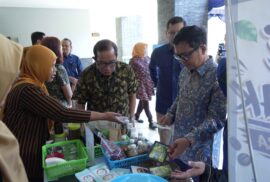
National Micro, Small, and Medium Enterprises (MSMEs) Day, observed every August 12, provided momentum for the Faculty of Agricultural Technology (FTP) Universitas Gadjah Mada (UGM), to strengthen the university’s contribution to the development of community-based businesses. This momentum took shape through the National MSME Workshop 2026, organized by UGM’s Directorate of Community Service (DPkM) in collaboration with FTP UGM on Wednesday, August 12, 2026 at the Kamanjani-Soenjoto Auditorium, FTP UGM. Held as part of the series of events marking FTP UGM’s 63rd Dies Natalis, the event brought together around 30 Micro, Small, and Medium Enterprises (MSMEs) actors through a learning forum, experience-sharing sessions, and a product exhibition aimed at strengthening a business ecosystem built on local potential.

The vice Dean for Academic and Student Affairs, FTP UGM, Prof. Dr. Yudi Pranoto, S.T.P, M.P, expressed hope that the event would go beyond a forum or product exhibition and generate broader impact for the community and business actors. 

“The hope is that this event won’t be limited to a meeting, a workshop, or a product showcase and networking session. Beyond that, there should of course be a significant impact, especially for the community and for business actors more broadly, at the national level,” he said. 

A similar view on the importance of MSMEs to the economy was also shared by UGM’s Vice Rector for Student Affairs, Community Service, and Alumni, Dr. Arie Sjujito, S.Sos., M.Si. According to him, the success of MSMEs is closely tied to the strength of the broader economy, and their development therefore deserves attention and support. 

“If MSMEs succeed, I believe our economy will grow strong. But if MSMEs are neglected and given no attention, a decline in that potential is bound to happen.” he said. 

Carrying the idea of synergy between community economic institutions through cooperatives and MSMEs, the workshop discussed various strategies for strengthening businesses built on local potential. Cooperatives were seen as capable of driving an ecosystem that supports MSME growth, while MSMEs form an important part of the productive economic activity that sustains cooperatives.

The discussion was enriched by a range of success stories from business actors and academics alike. Amirullah Setya Hardi, S.E., Cand.Oecon., Ph.D., from UGM’s Faculty of Economics and Business Discussed Strengthening cooperative institution as a platform for developing MSMEs’ flagship product. Meanwhile, Dr.Ir. Muhsin Al Anas, S.Pt., IPP., shared his experience with cage-free layer-hen business opportunities for producing omega-3 eggs through a group-based model.

On the side of developing products rooted in local wisdom. Herdiana Dewi Utari of CV Dewi Makmur shared her experience transforming traditional jamu (herbal tonic) into a healthy-lifestyle product and business opportunity. Another perspective was shared by Juni Noor Hastuti, owner of Matahari Craft, on turning corn-husk waste and natural fibers into dried-flower craft and home decor products with high economic value. Lenny Tursia Vishtrina of Evanz Store also shared her experience developing creative ideas to seize market opportunities.

The series of presentations and shared experience were guided through discussion sessions that gave participants the opportunity to exchange views with the speakers. Bayu Nugraha, S.T.P., M.Sc., of FTP UGM served as moderator for the second session, which discussed the selection of production tools and machinery to support economic institutions, along with various business-development experiences.

FTP UGM also contributed directly through a presentation on the selection of production tools and machinery to support economic institutions, delivered by Dr. Ir. Devi Yuni Susanti, S.T.P., M.SC., IPU., ASEAN Eng. This discussion reinforced the perspective that developing MSMEs requires not only creativity in producing goods, but also the right technological support to improve production effectiveness and capacity. 

As part of the series of events marking FTP UGM’s 63rd Dies Natalis, the event was also carried out in the spirit of the anniversary celebration, which reinforced FTP UGM’s contribution to the community. Dr. Novita Erna Kristanti, S.T.P., M.P., Chair of FTP UGM’s 63rd Dies Natalis Committee, played an important role in organizing the series of activities linking the Dies Natalis momentum with tangible contributions to the community and business actors.

Beyond the workshop and seminar sessions, the event also featured an exhibition of products from mentored MSMEs, held in the courtyard of the Kamarijani-Soenjoto Auditorium, FTP UGM. Around 30 MSMEs took part, showing their respective flagship products. The exhibition provided a space for business actors to introduce their products while opening up opportunities for interaction and networking with participants and other attendees.

The variety of products on display shows that MSMEs potential can grow from a range of local resources, from food and health products rooted in local wisdom to handicraft. Bringing together the experience of business actors, academic perspectives, and institutional support is expected to open up broader opportunities for collaboration in MSME development

For FTP UGM, participation in the National MSMEs Workshop 2026 forms part of the faculty’s commitment to contributing to the development of the community’s economy. Held to coincide with both National MSMEs Day and the series of events marking FTP UGM’s 63rd Dies Natalis, the event is expected to encourage MSMEs to grow, innovate, and move up to a level, while strengthening the community’s economy based on local potential.

This activity supports the achievement of the Sustainable Development Goals (SDGs), particularly SDG 8: Decent Work and Economic Growth, through strengthening the capacity, innovation, and development opportunities of MSMEs, and SDG 17; Partnerships for the Goals, through collaboration between universities, community institutions, and business actors in strengthening the community’s economic ecosystem

IoT-Based Waste Scales Strengthen Waste Management at FTP UGM

News ReleaseSDG 9: Industry Innovation and Infrastructure Monday, 27 July 2026

The Faculty of Agricultural Technology (FTP), Universitas Gadjah Mada (UGM), held a socialization session on the use of Internet of Things (IoT)-based waste scales on Monday, July 27, 2026, in Room 102, FTP UGM. The event was attended by the Waste Management Task Force, the Administration, Finance, and General Affairs Working Team, the Asset Team, and the FTP UGM Cleaning Service Team. Through the session, participants were given an understanding of how the IoT-based weighing mechanism works, to support waste management that is more accurate, well-documented, and data-driven.

The session featured Ir. Yakub Fahim Luckyarno, S.T., M.Eng., Ph.D., Yasir Abdulaziz, Muhammad Irfan Abdillah, and Alif Hikmah Kumara Zhali as speakers. In their presentation, it was explained that the IoT weighing system enables real-time recording of waste generation through two main categories: incoming waste and outgoing waste. Incoming waste refers to all waste generated within the FTP UGM environment, while outgoing waste refers to waste that has been sent to processing facilities outside the faculty.

One of the speakers, Alif Hikmah Kumara Zhali, explained that recording both categories is important to ensure the recorded waste-generation data reflects actual conditions.

“If waste is generated at FTP, it must first be recorded as incoming waste. Once that waste is later taken to a processing facility outside FTP, it is then recorded as outgoing waste. This way, the waste-generation data will match actual conditions,” Alif explained.

In addition to the recording mechanism, participants were also given an explanation of the correct weighing procedure needed to produce accurate data. Waste must be placed exactly at the center of the scale on a flat surface to prevent deviations in the weighing results. This operational standard is an important part of ensuring the quality of the data produced by the system.

Alif added that all weighing data would be automatically connected to the university’s server, allowing it to be used as a basis for waste-management policymaking.

“The data will go directly to UGM’s central server. It will then be analyzed as a basis for formulating policy and evaluating waste management across the campus,” he said.

The implementation of IoT-based waste scales at FTP UGM is expected to improve the accuracy of waste-generation data while supporting more effective and sustainable waste management. Through the use of digital technology, the faculty continues to strengthen its data-driven environmental management system as part of its commitment to building a greener, more sustainable campus.

This activity supports the achievement of the Sustainable Development Goals (SDGs), particularly SDG 11: Sustainable Cities and Communities, through the strengthening of waste-management systems within the campus environment; SDG 12: Responsible Consumption and Production, through more effective waste management; and SDG 9: Industry, Innovation and Infrastructure, through the use of Internet of Things technology to support more modern environmental governance.

SMA Negeri 3 Malang Visits FTP UGM to Explore University Life

News ReleaseSDG 17: Partnerships for the GoalsSDG 4: Quality Education Wednesday, 24 June 2026

The Faculty of Agricultural Technology (FTP) Universitas Gadjah Mada (UGM) welcomed a visit from students of SMA Negeri 3 Malang on June 24, 2026 at the FTP UGM campus. The event was part of FTP UGM’s ongoing effort to introduce high school students to university life and the academic environment.

During the event, Dr. Fiametta Ayu Purwandari, S.T.P., M.Sc., a lecture from the Department of Food Technology and Agricultural Product (TPHP), FTP UGM presented material on the profile of Universitas Gadjah Mada, its academic environment, and the various opportunities for self-development available to students during their studies at UGM.

Hendra Muhammad Fajar, S.E., staff of the academic and student affairs division, FTP UGM, presented material on the Faculty of Agricultural Technology UGM. The event continued with a sharing session led by FTP UGM student representatives on student life on campus. 

Through these presentations, the students gained an overview of university life and the academic atmosphere at the higher-education level.

The event ran interactively, with high enthusiasm from the students. During the discussion and Q&A session, students actively sought information on the learning system, student organization activities, academic support facilities, and what it’s like to live as a student at UGM. the relaxed and communicative atmosphere made it easier for students to get a firsthand feel for campus life.

Through this visit, FTP UGM hopes the students gained broader insight into higher education and felt motivated to pursue further studies at university. Beyond serving as an introduction to the academic environment, the event is also expected to help students in determining their interest and study choices for the future. 

This activity also supports the achievement of the Sustainable Development Goals (SDGs), particularly SDG  4; Quality Education, through providing inclusive and quality access to educational information, and SDG 17: Partnership for the Goals, through strengthening collaboration between universities and school in preparing an excellent competitive younger generation.

FTP UGM and Pertamina Develop Sago-Based Drilling Starch to Support Sustainable Energy Industry

News ReleaseSDG 12: Responsible Consumption and ProductionSDG 17: Partnerships for the GoalsSDG 7: Affordable and Clean EnergySDG 9: Industry Innovation and Infrastructure Tuesday, 23 June 2026

The Faculty of Agricultural Technology (FTP ) Universitas Gadjah Mada (UGM), and PT Pertamina (Persero) officially began a research collaboration to develop high-temperature drilling starch based on sago starch, marked by a contract signing and research kick-off on Monday, June 22, 2026, at the Operation Room, FTP UGM. The event was attended by the Vice President of Technology Innovation, Upstream & Low Carbon, PT Pertamina (Persero), Dr. Ali Sundja, representatives from PT Pertamina and the National Research and Innovation Agency (BRIN), and FTP UGM leadership, marking an initial step forward developing more environmentally friendly, locally sourced drilling materials.

Dean of FTP UGM, Prof. Dr. Ir. Eni Harmayani, M.SC., said the collaboration forms part of a broader effort to strengthen impactful research through synergy among universities, industry, and research institutions. According to her, the development of biodegradable drilling additives opens up opportunities to utilize various Indonesian agricultural commodities, including porang and sago, as functional materials that support the needs of the energy industry while increasing the added value of local commodities.

“Research today needs to be driven toward delivering real impact for industry and society. Collaborations like this create an opportunity to produce innovations that are not only scientifically strong, but also applicable and sustainable,” said Prof. Eni.

On the occasion, the research team presented plans for developing chemically modified sago-starch-based drilling starch as fluid loss reducer for high-temperature drilling operations. The research will run for 12 months, focusing on raw-material characterization, modification process optimization, product characterization, drilling-mud formulation testing, and value-added analysis as the basis for scaling up toward industrial production.

BRIN researcher Yanuar Sigit Pramana explained that Indonesia produces around 85 percent of the world’s sago, yet its utilization remains suboptimal due to its relatively low thermal stability. Through this research, sago starch is expected to be upgraded from a natural commodity into a value-added functional material capable of meeting the needs of the domestic drilling industry. 

Beyond supporting the needs of the energy industry, the development of sago-starch-based drilling starch is also expected to reduce dependence on imported materials, strengthen the competitiveness of the national industry, expand the use of sago in non-food sectors, and generated higher economic value for farmers and business in sago-producing regions.

The collaboration between FTP UGM and PT Pertamina (Persero), and BRIN reflects the strengthening of a triple-helix research ecosystem that connects universities, industry, and research institutions in producing innovations ready for downstream commercialization. Through this synergy, the research is expected to generate not only academic output, but also real solutions for a more efficient and sustainable national energy industry.

This activity supports the achievement of the Sustainable Development Goals (SDGs), particularly SDG 9; Industry, Innovation and Infrastructure, through the development of technology based on local resources; SDG 12; Responsible Consumption and Production, through the transformation of sago into a value-added product; SDG 7: Affordable and Clean Energy, through the innovation of more environmentally friendly materials supporting the energy industry, and SDG 17: Partnerships for the Goals, through strategic collaboration among universities, industry, and research institutions.

12

Recent Posts

  • Three DTPB FTP UGM Study Programs Secure ASIIN International Accreditation Through 2030
  • Dari Benih hingga Lahan, FTP UGM dan Sang Hyang Seri Kembangkan Teknologi Pertanian Berbasis Data
  • Learning Across Cultures at Jeonbuk National University, South Korea
  • Beautiful Learning Journey: A Student Exchange at JBNU, South Korea
  • My Experience at Khon Kaen University (TPHP Student Mobility Program)

UGM News

  • UGM Earns Five Star Plus in 2025 ASEAN Healthy University Assessment
  • 130 Alumni Join UGM’s 19th Kagama Cup Tennis Tournament
  • UGMPreneurs 2026: From Business Ideas to Successful Execution
  • Porsenigama 2026 Brings Together 4,556 UGM Students Through Sports and Arts
  • 43 UGM Teams Prepare to Compete at PIMNAS 2026
Universitas Gadjah Mada

UNIVERSITAS GADJAH MADA
FACULTY OF AGRICULTURAL TECHNOLOGY
Jl. Flora No. 1 Bulaksumur
Yogyakarta, Indonesia 55281
+62 274 589797
+62 274 589797
fateta[at]ugm.ac.id

Faculty Information

  • News Release
  • Event
  • Academic
  • Scholarship
  • Job Vacancy
  • Grant

Department

  • Food and Agricultural Product Technology
  • Agricultural Engineering and Biosystem
  • Agro-industrial Technology

Supporting Units

  • Quality Management Unit
  • Agricultural Technology Career Center

Journals

  • Agritech
  • Agroindustrial Journal
  • Indonesian Food and Nutrition Progress

© 2026 Faculty of Agricultural Technology UGM

SitemapPrivacy PolicyContact

KEBIJAKAN PRIVASI/PRIVACY POLICY

[EN] We use cookies to help our viewer get the best experience on our website. -- [ID] Kami menggunakan cookie untuk membantu pengunjung kami mendapatkan pengalaman terbaik di situs web kami.I Agree / Saya Setuju