• About UGM
  • Academic Portal
  • IT Center
  • Library
  • Research
  • Webmail
  • English
    • Indonesia
    • English
Universitas Gadjah Mada Universitas Gadjah Mada
Faculty of Agricultural Technology
  • Home
  • About Us
    • History of Faculty
    • Vission and Mission
    • Dies Natalis
    • Goals and Objectives
    • Institution Structure
    • Faculty Management
    • Facilities
      • Library
      • Laboratory
    • Lecturer Staff
    • Cooperation
    • Contact
  • Education
    • Department
    • Study Program
    • Graduate & Postgraduate Program
    • Accreditation
    • Academic Calendar
    • SUMMER COURSE
    • Fast Track Program
  • Research
    • Journal
    • Books
  • College Student
    • Information
    • Student Services
    • Student Organizations
    • Internship
    • Scholarship
  • Alumni
    • List of Graduates
    • Career
    • Tracer Study
  • Home
  • SDG 2: Zero Hunger
Arsip:

SDG 2: Zero Hunger

PIONIR Agrophoria 2026 Kicks Off, Instilling an Agrotechnology Spirit for Sustainable Food Sovereignty

SDG 2: Zero HungerSDG 4: Quality Education Wednesday, 5 August 2026

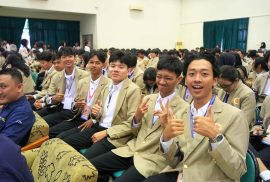
Building food sovereignty requires more than technological innovation alone, it also calls for human resources with integrity, care, and the ability to collaborate. With that spirit in mind, the Faculty of Agricultural Technology (FTP), Universitas Gadjah Mada (UGM), officially opened PIONIR Agrophoria 2026 on Tuesday (5/8) at the Kamarijani Soenjoto Auditorium, FTP UGM, under the theme “Nurturing Agrotechnology to Cultivate Food Sovereignty and Sustainable Future.” Over the two-day program, new students were introduced to the role of agrotechnology as the foundation for achieving food sovereignty while building a sustainable future.

Carrying the tagline “Berdaulat Pangan untuk Masa Depan, Kami Agrotech Muda” (Food Sovereignty for the Future, We Are the Young Agrotechnologists), PIONIR Agrophoria 2026 was designed not merely as an introduction to campus life, but as a space for shaping how new students think about food-related challenges from a broader perspective. Students were encouraged to become an adaptive, innovative generation capable of delivering science- and technology-based solutions for the food and agriculture sector.

In her remarks, Prof. Dr. Ir. Eni Harmayani, M.Sc., Dean of FTP UGM, emphasized that the university learning process should not stop at academic achievement alone, but should also produce graduates with strong curiosity who are able to bring real benefit to society. “I’d like to share a few simple messages. First, hold on to a strong sense of curiosity. Don’t study merely to earn grades, study to understand, to find solutions, and to create value for others,” she said.

The Dean added that the challenges students face throughout their studies must be met with strong time-management skills and solid character. “Coursework, student organizations, research, competitions, community service, and personal life all need to run in balance. Success is shaped not only by intelligence, but also by discipline and consistency,” she said.

The Dean also reminded students that integrity remains the foundation every UGM graduate must hold onto. “Build your character. Honesty, responsibility, mutual respect, and the ability to work together matter just as much as academic knowledge. Integrity is the most essential capital a UGM graduate can carry,” she stressed.

That spirit was carried through a series of activities designed to prepare new students for both academic life and the challenges they will face as future agricultural technology professionals. Alongside an introduction to the FTP UGM environment, students took part in a “Career Exploration: Future Me” session, a “Development Class: Discovering Growth in Every Process,” and facilitator-led sessions on academic integrity, time management, digital literacy, and personal development.

In line with the broader theme of PIONIR Agrophoria 2026, students also attended the “Cultivating Agrotechnovation” Talkshow, themed “Synthetic Food Innovation and Natural Resource Efficiency for a Sustainable Future.” The session explored how innovation in agricultural and food technology can help address challenges in food security, natural resource efficiency, and sustainable development. Students then deepened this understanding through a Focus Group Discussion on food security strategy and a personal-development mind-mapping exercise to prepare them for their four years of study ahead.

PIONIR Agrophoria 2026 was coordinated by Fashna Iftirosyana, a 2024 cohort student from the Department of Agricultural and Biosystem Engineering, who served as General Coordinator, together with Moh. Wahyudin, S.T.P., M.Sc., Ph.D., who served as Group Coordinator. The opening ceremony was marked by the assembly of the Agrophoria logo puzzle and the lighting of an installation, symbolizing the start of new students’ journey as part of the FTP UGM family.

Through PIONIR Agrophoria 2026, FTP UGM hopes new students will not only become familiar with campus life, but will also embrace a vision as Agrotech Muda capable of integrating knowledge, innovation, and collaboration to help realize Indonesia’s food sovereignty and build a more sustainable future.

This activity supports the achievement of the Sustainable Development Goals (SDGs), particularly SDG 2: Zero Hunger, through a strengthened understanding of food security and sovereignty; SDG 4: Quality Education, through character building and orientation for new students; SDG 9: Industry, Innovation and Infrastructure, through the introduction of agrotechnological innovation; and SDG 17: Partnerships for the Goals, through collaboration across the academic community in preparing the next generation to face global challenges.

Contributor : Bernadetta Shella
FTP UGM Hosts EY4F Campaign Guest Lecture, Encouraging Young People’s Role in Building a Sustainable Food System

News ReleaseSDG 17: Partnerships for the GoalsSDG 2: Zero HungerSDG 4: Quality Education Friday, 10 July 2026

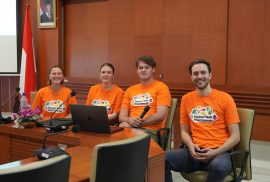
The Faculty of Agricultural Technology (FTP) Universitas Gadjah Mada (UGM), held a Guest Lecture and Coffee Chat with Students titled the Empower Youth for Food (EY4F) Campaign on Thursday (9/7) at FTP UGM campus, featured four master’s students from Erasmus University Rotterdam who are part of an International Research Project: Maaike van Rijs, Floor Vriesman, Daan Houweling, and Leon Biesbroeck. Through interactive discussion, the event served as a platform for exchanging ideas on the role of young people in building a more sustainable food system, while also strengthening international academic collaboration. 


Carrying the theme Empower Youth for Food, the event encouraged students to examine the various challenges facing the global food system from a broader perspective. The discussion covered the importance of innovation, entrepreneurship, and cross-disciplinary collaboration as ways to develop solutions to various issues in the agriculture and food sector. The presence of students from Erasmus University Rotterdam also gave participants the opportunity to learn about experiences, approaches, and practices developing at the international level.


The coffee chat session took place in a warm and interactive atmosphere. FTP UGM students had the opportunity to engage directly in dialogue on a range of issues, from innovation in the food system and entrepreneurship development opportunities to the importance of young people’s involvement in supporting the transformation towards a sustainable food system. The interaction also served as a space to expand academic networks and build cross-cultural understanding among participants.


Through this event, FTP UGM continues to strengthen it’s commitment to fostering a globally oriented learning environment. Collaboration with international students is expected not only to enrich students’ academic perspectives, but also to open up opportunities for cooperation in education, research, and community service that can create real impact for the development of the agriculture and food sectors.


This activity supports the achievement of the Sustainable Development Goals (SDGs), particularly SDG 4: Quality Education, through learning grounded in international collaboration; SDG 2 Zero Hunger, through strengthening young people’s capacity to support a sustainable food system; and SDG 17: Partnerships for the Goals, through the development of academic networks and collaboration between FTP UGM and international partner.


Contributor: Bernadetta Shella

Exploring Traditional Agriculture and Culture: Field Trip to Selopamioro Village

News ReleaseSDG 15: Life on LandSDG 2: Zero Hunger Tuesday, 13 August 2024

The field trip began with students boarding two buses. Our first stop was near Selopamioro to pick up snacks, which included sweet potatoes, krupuk-like snacks made from potatoes, pudding, and a type of bread with cheese. The variety of flavors was interesting, and the iced tea was refreshing.

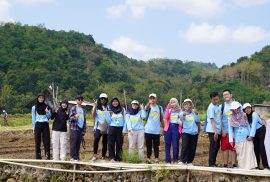
After enjoying the beautiful scenic views of Bantul along with our snacks, we arrived at the main crop fields. There, we saw farmers and vast fields ready for planting seeds. We were divided into two groups: Group 1 consisted of participants from Groups 1, 3, and 5, while Group 2 included those from Groups 2, 4, and 6. Each group was guided by a local farmer to plant onions.

The land was in good condition, and we were instructed to plant eight onions in a single line, leaving about 10 centimeters between each one. It was a fascinating experience, and we bonded well while learning words from different languages. One interesting aspect of the local culture was their practice of sharing water ponds and farming tools.

We also observed the water reserves, where rainwater collected from higher elevations is used for farming. The system can be utilized during dry spells, thanks to an IoT-based rain calculation system installed by FTP UGM. This system helps farmers predict rainfall adequacy for crops and manage irrigation efficiently. While gravity mainly transports water, diesel pumps are gradually being replaced by electric ones to reduce costs. Previously, farmers could only harvest once a year, but now, with these practices, they can cultivate paddy and tobacco twice a year.

During the field trip, an interview was conducted with Pak Tuh Gimin, a local farmer. Pak Tuh Gimin has three children, all of whom are married and also work as farmers. His farming group manages a total of 120 hectares of land, which is divided among the members, with each receiving around 1,000 square meters, though the exact amount can vary.

According to Pak Tuh Gimin, the farming schedule is as follows:

  • September, October, November: Vegetable season (“sayur”).
  • January, February, March, April: Paddy season.
  • April, May, June: Red onion (“bawang merah”) season.

This seasonal rotation allows the farmers to maximize the productivity of their land throughout the year.

After leaving the farm with wonderful memories, we arrived at Sekolah Sungai Siluk, where we had lunch. We then participated in an engaging gamelan class. The participants quickly learned to synchronize their playing, which was impressive.

We have gamelan class that we find interesting. We learned a lot about tempo, music note, and we learned how to play gamelan. At first it was hard to play. but after some adjustment gamelan seems so interesting and became a cool stuff we learned here. Also, gamelan is one of the most famous traditional music in Indonesia. We played a ‘gugur gunung’ song.

After the gamelan class, we made Es Telang, a drink made with Telegah flowers, coconut jelly, lychee jelly, basil seeds, ice, and lemon. The Telang flower comes in three colors: blue, pink, and white. It is easy to grow and offers numerous health benefits, such as being an antioxidant and helping with eye infections, inflammation, diabetes, and cholesterol. The flower is also known for its anti-aging properties. A fascinating feature is its color-changing ability when lemon is added: the blue flower turns purple, the pink turns blue, and the white remains unchanged.

The Telang flower is abundant in Selopamioro village, and FTP UGM has collaborated with the community to promote its benefits. The drink is easy to make and rejuvenating. I hope to try the Es Telang Herbal one day, as I am curious about its taste, which includes different ingredients. Typically, two to three flowers are needed to make 250 ml of water, and they can be either boiled in water or added to boiling water.

After enjoying the Es Telang, we boarded the buses for the journey back to FTP UGM.

Global Perspectives on Sustainable Agriculture and Manufacturing: Insights from Korea and Beyond

News ReleaseSDG 12: Responsible Consumption and ProductionSDG 13: Climate ActionSDG 15: Life on LandSDG 2: Zero HungerSDG 9: Industry Innovation and Infrastructure Saturday, 10 August 2024

This morning, August 9th 2024, at 07.30 Western Indonesia Time (GMT+7), marked the 11th day of the Summer Course (SC) 2024 held by the Faculty of Agricultural Technology, Universitas Gadjah Mada.

There were 4 speakers, 2 online and 2 on-site. The first lecture was on International Agricultural Development and Cooperation from Korea’s Perspective, moderated by Sintia Putri Pradita, M.Sc. from FAT UGM. Taeyoon Kim, Ph.D. from Seoul National University South Korea, explained about agricultural development especially related to GDP per capita with rural populations in Asian countries such as Japan and Korea from 1960 until now. He mentioned an example of food value implemented in the USA and agricultural contributions such as source of labor for the modern sector, saving for investment, foreign exchange through export, etc.      
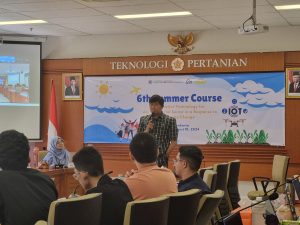
Before continuing to the next session, we had a coffee break from 09.15-09.45. The second lecture was on Reducing Food Waste with Food Packaging, moderated by Dr. Inasanti Pandan Wangi from FAT UGM. Dr. Nur Alim Bahmid (on-site speaker) from National Research and Innovation Agency of the Republic Indonesia, explained the importance of food packaging to reduce food waste. He then gave some examples of new innovations of packaging to extend product’s shelf life such as Modified Atmosphere Packaging (MAP), smart packaging, active packaging and intelligent packaging. He mentioned his brief research of antimicrobial packaging from mustard seed extracts to be incorporated in meat packaging.  

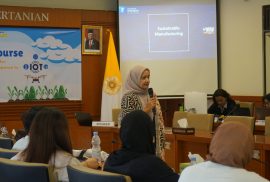
The second session ended at 11.30 then we moved to the next session which was lunch break and prayer time. The plenary started at 13.00 for the third lecture on Sustainable Manufacturing. Dr. Novita Sakundarini (on-site speaker) from University of Nottingham Malaysia explained the facts about our planet and current issues about global warming and climate change. She gave understanding about the importance of protecting the Earth and urgency of achieving sustainable development goals (SDGs). She explained the new innovation for sustainable manufacturing such as AI and how industrial sectors such as Toyota, Niki and Ajinomoto implemented those policies in their company.    

The fourth session started after a 30 minute coffee break around 15.15. It was about Agro-industrial Sustainability and Digital Transformation, moderated by Thalia Naziha, M.Sc., MBA from FAT UGM. Prof. Dr. rer. nat. Markus Frank from Nuertingen-Geislingen University, Germany explained the concept of agricultural sustainability by giving participants farming simulation (online exercise) through a website. He explained the biodiversity and intensive agriculture as well as future farming. He mentioned the advantages of a sustainable food system such as high resource efficiency, value orientation, direct contact between producer and consumer, etc. 

Field Trip to PIAT UGM: Integrating Waste Management with Sustainable Agricultural Practices

News ReleaseSDG 11: Sustainable Cities and CommunitiesSDG 12: Responsible Consumption and ProductionSDG 13: Climate ActionSDG 15: Life on LandSDG 2: Zero HungerSDG 3: Good Health and Well-beingSDG 6: Clean Water and SanitationSummer Course Friday, 9 August 2024

During our field trip to the Pusat Inovasi Agroteknologi (PIAT) at Universitas Gadjah Mada (UGM), we explored innovative solutions to address Indonesia’s ongoing waste management challenges. The issue of imperfect waste management has become increasingly pressing, especially with the closure of the garbage landfill in Yogyakarta this year. This has highlighted the urgency of improving waste processing, which ideally begins at the household level or on a small scale.

At UGM’s RINDU plant, we witnessed firsthand the advancements in waste processing. The facility’s transformation of the landfill site was impressive, showcasing the before-and-after scenarios demonstrating their methods’ effectiveness. Food waste, a significant component of the waste stream, is managed at UGM using Black Soldier Flies and Maggot troops. This innovative approach reduces waste and provides sustainable solutions for feed production.

Drying process of Black Soldier Fly Larvae (Maggot BSF) for Animal Feed

Speaker: Arif Mujarab, PIAT, Universitas Gadjah Mada

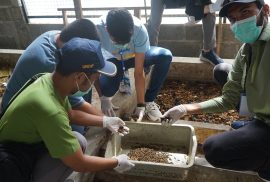
Arif Mujarab, a worker at the Pusat Inovasi Agroteknologi Terpadu (PIAT) at Universitas Gadjah Mada, with two children and several years of experience, provided an overview of the process for drying black soldier fly larvae (BSF) to create animal feed. He explained that the process starts with selecting fresh, live maggots, which are then cleaned and weighed. Although the drying machine at PIAT has a capacity of 5 kilograms, he demonstrated the process using 2 kilograms for quicker results. The maggots are placed in a drying or roasting machine, and the drying process takes around 45 minutes. At the 20-minute mark, the maggots are checked for dryness, and the process continues until they are fully dried and ready for use as feed.

BSF maggot need to be separated into 3 different sizes, the smallest ones are not capable enough to digest organic matter. so they need to be cultivated in order to have a bigger size. the biggest size one are capable to digest all organic matter. the organic matter such as food waste but it needed longer time to proccess the hard part like eggshell.

Manufacturing Bottle Caps Using Recycled Materials

Speaker: Surono

Surono, who has worked at the facility for 13 years and is a father of two daughters, one of whom is preparing to enter college, discussed the manufacturing process of bottle caps using recycled materials. He described how plastic materials are first shredded into smaller pieces and then heated to a temperature of approximately 180 degrees Celsius for 15 to 17 minutes. Once heated, the materials are pressed and held under pressure for about 5 minutes. The formed bottle caps are then removed from the mold, completing the process.

Internship Experience in Energy and Waste Processing at PIAT

Speaker: Muhammad Ridwan Alfin, Marine Science Department, Universitas Padjadjaran

Muhammad Ridwan Alfin, a student from the Marine Science Department at Universitas Padjadjaran, completed a four-day internship at the Pusat Inovasi Agroteknologi Terpadu (PIAT) at Universitas Gadjah Mada. During his internship, he gained hands-on experience in energy and waste processing, which contrasted with his classroom learning. The practical fieldwork allowed him to apply his academic knowledge directly. He also emphasized the importance of teamwork, which he experienced throughout the internship, and noted that this opportunity has equipped him with valuable skills for his future career.

Our visit included practical experiences, such as hatching maggot eggs and participating in the collection, sorting, drying, and packing of maggots for feed. We also learned how to create eco-enzymes from organic food waste, an initiative that promotes sustainability and environmental responsibility. Additionally, the opportunity to hatch chicken eggs and interact with deer was a delightful experience, adding a fun and educational aspect to our visit.

UGM PIAT is truly making remarkable strides in waste management and sustainability. Their commitment to innovation and education is evident, and it was inspiring to see their efforts in action.

At PIAT FTP UGM, black soldier fly larvae are used for the waste conversation. So first we introduced the BSF life cycle. From egg to produce larvae it takes 7 days. This is one of the easiest and most popular processes in the world. For sustainable waste management, this plant collects waste from the UGM campus area. Then they sort out the waste in different categories like waste from food, waste from plastic etc. At Rindu plant, first food wastes the grinding at grinder machines and then when it comes to powder form they mix milk and some other ingredients to make quality full fertilisers. And lastly there also has a machinery for making granular forms of fertiliser. They shared that this eco-friendly waste management is really profitable. 

12

Recent Posts

  • Three DTPB FTP UGM Study Programs Secure ASIIN International Accreditation Through 2030
  • Dari Benih hingga Lahan, FTP UGM dan Sang Hyang Seri Kembangkan Teknologi Pertanian Berbasis Data
  • Learning Across Cultures at Jeonbuk National University, South Korea
  • Beautiful Learning Journey: A Student Exchange at JBNU, South Korea
  • My Experience at Khon Kaen University (TPHP Student Mobility Program)

UGM News

  • UGM’s Youngest Doctoral Graduate Advances Native Chicken Genetics
  • UGM and NTU Host ASEAN Summer School on Renewable Energy and Smart Cities
  • BSI Scholarship Helps First-Generation Student Silvia Study Chemistry at UGM
  • Black Aromatic Ginger and Gotu Kola: UGM Study Finds Potential Herbal Therapy for Optic Nerve Inflammation
  • UGM Promotes Green Dentistry Through Free Dental Checkups and Oral Health Education
Universitas Gadjah Mada

UNIVERSITAS GADJAH MADA
FACULTY OF AGRICULTURAL TECHNOLOGY
Jl. Flora No. 1 Bulaksumur
Yogyakarta, Indonesia 55281
+62 274 589797
+62 274 589797
fateta[at]ugm.ac.id

Faculty Information

  • News Release
  • Event
  • Academic
  • Scholarship
  • Job Vacancy
  • Grant

Department

  • Food and Agricultural Product Technology
  • Agricultural Engineering and Biosystem
  • Agro-industrial Technology

Supporting Units

  • Quality Management Unit
  • Agricultural Technology Career Center

Journals

  • Agritech
  • Agroindustrial Journal
  • Indonesian Food and Nutrition Progress

© 2026 Faculty of Agricultural Technology UGM

SitemapPrivacy PolicyContact

KEBIJAKAN PRIVASI/PRIVACY POLICY

[EN] We use cookies to help our viewer get the best experience on our website. -- [ID] Kami menggunakan cookie untuk membantu pengunjung kami mendapatkan pengalaman terbaik di situs web kami.I Agree / Saya Setuju