• About UGM
  • Academic Portal
  • IT Center
  • Library
  • Research
  • Webmail
  • English
    • Indonesia
    • English
Universitas Gadjah Mada Universitas Gadjah Mada
Faculty of Agricultural Technology
  • Home
  • About Us
    • History of Faculty
    • Vission and Mission
    • Dies Natalis
    • Goals and Objectives
    • Institution Structure
    • Faculty Management
    • Facilities
      • Library
      • Laboratory
    • Lecturer Staff
    • Cooperation
    • Contact
  • Education
    • Department
    • Study Program
    • Graduate & Postgraduate Program
    • Accreditation
    • Academic Calendar
    • SUMMER COURSE
    • Fast Track Program
  • Research
    • Journal
    • Books
  • College Student
    • Information
    • Student Services
    • Student Organizations
    • Internship
    • Scholarship
  • Alumni
    • List of Graduates
    • Career
    • Tracer Study
  • Home
  • SDG 2: Zero Hunger
  • (Page 2)
Arsip:

SDG 2: Zero Hunger

Innovations in Food Engineering and Soil Health: Enhancing Agricultural Productivity and Nutrition

News ReleaseSDG 12: Responsible Consumption and ProductionSDG 15: Life on LandSDG 2: Zero HungerSDG 3: Good Health and Well-being Thursday, 8 August 2024

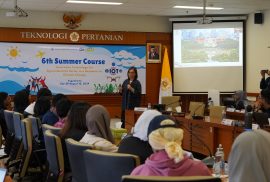
This morning, August 7th 2024, at 08.00 Western Indonesia Time (GMT+7), marked the 9th day of the Summer Course (SC) 2024 held by the Faculty of Agricultural Technology, Universitas Gadjah Mada.

There were 4 speakers, 3 online and 1 on-site. The first lecture was on Food Engineering, moderated by Wahyu Dwi Saputro, Ph.D. from FAT UGM. Prof. Dr. Rosnah Shamsudin, Professor from Universiti Putra Malaysia, explained about food processing including the primary and secondary techniques to enhance products/commodities shelf life, improve quality and functionally be more useful. She also mentioned the definition, goals, scoop, and the importance of food engineering. She elaborated the process and practices of Food Engineering and the possible research topics in food engineering. She stated the difference between agricultural engineering and food engineering and the role of food engineer in every supply chain to give understanding about the future career.       

Before continuing to the next session, we had a coffee break from 09.45-10.15. The second lecture was on Food Functionalization, moderated by Qurrotul A’yun, Ph.D.  from FAT UGM. Dr. Chaleeda Borompichaichartkul (on-site speaker) from Chulalongkorn University Thailand, explained the difference between functional food and food functions and how both of them were intercorrelated. She explained the trend of food in the new industry evolution as well as the lifestyle evolution as nowadays there are many noncommunicable diseases (NCDs) affecting society. She stated the importance of gut-brain axis and how active compounds, microbiota (fermented food), and meat alternatives can be great solutions. She also explained her latest research about fermented pineapple juice to produce bacteria cellulose (nata) especially co-fermentation with probiotics 

The second session ended at 12.00 then we moved to the next session which was lunch break and prayer time. The plenary started at 13.00 for the third lecture on Soil Health for Promoting Agricultural Production, moderated by Ahdiar Fikri Maulana, Ph.D. from FAT UGM. Dr. Katharina Keiblinger from The University of Natural Resources and LIfe Sciences, Vienna (BOKU) explained the characteristics and the structure of soil and how microbiota, microbial activity and the seasonal effects affected the soil. She also explained about co-creation of diverse stakeholders, locally available soil amendments, and future research about remediation strategies of heavy metal and soil parameters. 

The fourth session started after a 30 minute coffee break around 15.15. It was about Protein Transition and The Nutritional Quality of the Diet, moderated by Dr. Lily Arsanti Lestari from FAT UGM. Dr. Eduardo Capuano from Wageningen University and Research, The Netherlands explained the example of protein transition and commodities that are potential for alternating meat protein such as legumes, insects, microalgae, mycoproteins, and PBMA. He showed the calculation of PDCAAS and DIAAS and ratios of dietary fiber, iron and vitamin B12 of each protein alternative compared to real meat (beef).  
Advancing Agricultural Sustainability: Water Management, Smart Farming, and Climate Change Adaptation

News ReleaseSDG 1: No PovertySDG 2: Zero HungerSDG 6: Clean Water and SanitationSummer Course Monday, 5 August 2024

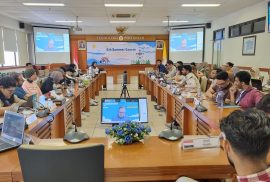
This morning, August 5th 2024, at 08.00 Western Indonesia Time (GMT+7), marked the 7th day of the Summer Course (SC) 2024 held by the Faculty of Agricultural Technology, Universitas Gadjah Mada.

There were 4 speakers, 3 online and 1 on-site. The first lecture was on Water Management and Quality for the Agricultural System, moderated by Dr. Prieskarinda Lestari from FAT UGM. Prof. Gary R. Sands, Ph.D., Professor from University of Minnesota USA, explained the global distribution of agricultural areas and the global land used for food production. He mentioned the challenge and obstacles of global water issues especially in the agricultural sector and elaborated the solution as well as the opportunity for reducing agriculture’s water footprint to restore water quantity and quality. 

Before continuing to the next session, we had a coffee break from 09.45-10.15. The second lecture was on Irrigation and Climate Change, moderated by Muhammad Khoiru Zaki, Ph.D from FAT UGM. Prof. Dr. Ki Hee Ryu, Professor from Seoul National University South Korea, explained the global trends for irrigation in climate change mentioning Sustainable Development Goals Target 1 (no poverty), 2 (zero hunger), 6 (clean water and sanitation). He elaborated the effort for irrigation modernization in Indonesia both the challenges and the opportunities.

The second session ended at 12.00 then we moved to the next session which was lunch break and prayer time. The plenary started at 13.00 for the third lecture on Plant Factory, moderated by Imam Bagus Nugroho, M.Sc. from FAT UGM. Dr. Md. Parvez Islam from Ehime University, Japan explained artificial intelligence in agriculture. He showed many graphs about population, grain production and land used in Japan. He elaborated the challenges in the agriculture sector worldwide and the modern way to solve agricultural problems such as automation, AI, and robots to achieve the future vision of the society 5.0 plant factory.

The fourth session started after a 30 minute coffee break around 15.00. It was about Smart Farming and Climate Change, moderated by Bayu Nugraha, Ph.D. from FAT UGM. Bayu Dwi Apri Nugroho (on-site speaker) from FAT UGM explained the basics of climate change, the effect of climate change in the agriculture sector. He mentioned his latest interest in using technology for smart farming systems such as AI to forecast environmental conditions, drone, and smartphone application.

12

Recent Posts

  • Three DTPB FTP UGM Study Programs Secure ASIIN International Accreditation Through 2030
  • Dari Benih hingga Lahan, FTP UGM dan Sang Hyang Seri Kembangkan Teknologi Pertanian Berbasis Data
  • Learning Across Cultures at Jeonbuk National University, South Korea
  • Beautiful Learning Journey: A Student Exchange at JBNU, South Korea
  • My Experience at Khon Kaen University (TPHP Student Mobility Program)

UGM News

  • UGM’s Youngest Doctoral Graduate Advances Native Chicken Genetics
  • UGM and NTU Host ASEAN Summer School on Renewable Energy and Smart Cities
  • BSI Scholarship Helps First-Generation Student Silvia Study Chemistry at UGM
  • Black Aromatic Ginger and Gotu Kola: UGM Study Finds Potential Herbal Therapy for Optic Nerve Inflammation
  • UGM Promotes Green Dentistry Through Free Dental Checkups and Oral Health Education
Universitas Gadjah Mada

UNIVERSITAS GADJAH MADA
FACULTY OF AGRICULTURAL TECHNOLOGY
Jl. Flora No. 1 Bulaksumur
Yogyakarta, Indonesia 55281
+62 274 589797
+62 274 589797
fateta[at]ugm.ac.id

Faculty Information

  • News Release
  • Event
  • Academic
  • Scholarship
  • Job Vacancy
  • Grant

Department

  • Food and Agricultural Product Technology
  • Agricultural Engineering and Biosystem
  • Agro-industrial Technology

Supporting Units

  • Quality Management Unit
  • Agricultural Technology Career Center

Journals

  • Agritech
  • Agroindustrial Journal
  • Indonesian Food and Nutrition Progress

© 2026 Faculty of Agricultural Technology UGM

SitemapPrivacy PolicyContact

KEBIJAKAN PRIVASI/PRIVACY POLICY

[EN] We use cookies to help our viewer get the best experience on our website. -- [ID] Kami menggunakan cookie untuk membantu pengunjung kami mendapatkan pengalaman terbaik di situs web kami.I Agree / Saya Setuju