• About UGM
  • Academic Portal
  • IT Center
  • Library
  • Research
  • Webmail
  • English
    • Indonesia
    • English
Universitas Gadjah Mada Universitas Gadjah Mada
Faculty of Agricultural Technology
  • Home
  • About Us
    • History of Faculty
    • Vission and Mission
    • Dies Natalis
    • Goals and Objectives
    • Institution Structure
    • Faculty Management
    • Facilities
      • Library
      • Laboratory
    • Lecturer Staff
    • Cooperation
    • Contact
  • Education
    • Department
    • Study Program
    • Graduate & Postgraduate Program
    • Accreditation
    • Academic Calendar
    • SUMMER COURSE
    • Fast Track Program
  • Research
    • Journal
    • Books
  • College Student
    • Information
    • Student Services
    • Student Organizations
    • Internship
    • Scholarship
  • Alumni
    • List of Graduates
    • Career
    • Tracer Study
  • Home
  • SDG 11: Sustainable Cities and Communities
Arsip:

SDG 11: Sustainable Cities and Communities

FTP UGM and Semarang City Government Strengthen Research-Based Collaboration to Develop Urban Gastronomy

SDG 11: Sustainable Cities and CommunitiesSDG 17: Partnerships for the Goals Wednesday, 5 August 2026

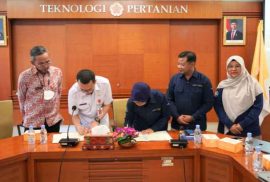
The Faculty of Agricultural Technology (FTP), Universitas Gadjah Mada (UGM), strengthened collaboration with the Regional Research and Innovation Agency (BRIDA) of Semarang City through the signing of a Cooperation Agreement (PKS) and a Self-Managed Cooperation Contract, followed by a follow-up discussion on the “Study on the Development Potential of Urban Gastronomy in Semarang City,” held on Wednesday (5/8) at the Operation Room, FTP UGM. The collaboration marks an initial step toward a research-based study aimed at strengthening Semarang’s flagship culinary products as part of the city’s branding strategy and creative-economy development.

In the discussion, Head of BRIDA Semarang City, Dr. Bagus Irawan, S.T., M.T., M.Eng., described gastronomy development as a strategic effort supporting the strengthening of branding for Semarang City’s flagship products in order to accelerate the growth of the creative economy. In addition, Asdani Kindarto, S.Sos., M.Eng., Ph.D., Head of the Research and Development Division at BRIDA Semarang City, emphasized that developing gastronomy requires an approach that looks not only at culinary products, but also integrates cultural values that have so far remained scattered across various narratives. According to him, a strong gastronomic foundation will become an important asset in building the city’s identity. “Good diplomacy begins with the stomach. That’s why strengthening the culinary foundation will make it easier to achieve Semarang’s city-branding goals,” he said.

Responding to this point, Bambang Dwi Wijatniko explained that developing urban gastronomy requires standards capable of preserving both the identity and the quality of regional culinary products. He noted that the process should not stop at cataloguing traditional foods, but must also address food safety, marketing, and product sustainability. “Recipe standardization serves to reinforce a product’s identity. Alongside recipe variation, the key factors that must be addressed are sanitation, branding, and shelf life,” Bambang explained. 

He added that one of the requirements for a city to gain recognition as a UNESCO Creative City of Gastronomy is to have at least three flagship culinary products, hold regular seminars, and produce annual reports on culinary product development and activities, noting that seminars and masterclasses are an important part of building a sustainable gastronomy ecosystem.

Prof. Dr. Ir. Eni Harmayani, Dean of FTP UGM, said the planned study would not only identify culinary potential but also produce scientific recommendations that local governments can use to formulate its gastronomy development strategy. The study will focus on co-creation value and existing conditions, culinary diversity as a marker of regional identity, and the history and cultural acculturation that have shaped Semarang’s culinary richness.

Input on the research approach was also offered by Dr. Dwi Larasatie Nur Fibri, who highlighted the importance of developing a comprehensive survey instrument and applying analytical methods suited to processing data at a macro scale. She added that structured culinary documentation is an important step for strengthening the region’s gastronomic identity and raising public awareness of local culinary heritage.

Through this collaboration, FTP UGM, together with BRIDA and the Semarang City Regional Development Planning Agency (Bappeda), hopes to produce a study that not only strengthens Semarang’s culinary identity but also serves as the basis for research-based policymaking in urban gastronomy development. The collaboration is expected to help boost the region’s competitiveness through the preservation of culinary heritage, the strengthening of the creative economy, and the development of gastronomy networks at both the national and international levels.

This activity supports the achievement of the Sustainable Development Goals (SDGs), particularly SDG 11: Sustainable Cities and Communities, through the strengthening of the city’s identity based on its culinary heritage; SDG 8: Decent Work and Economic Growth, through the development of a gastronomy-based creative economy; and SDG 17: Partnerships for the Goals, through collaboration between universities and local government in producing research-based policy.

Contributor : Bernadetta Shella

FTP UGM Strengthens Emergency Preparedness through Hydrant Pump Training

News ReleaseSDG 11: Sustainable Cities and CommunitiesSDG 3: Good Health and Well-beingSDG 4: Quality Education Friday, 24 July 2026

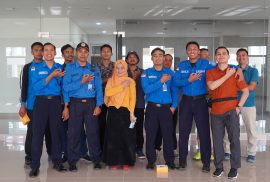
The Faculty of Agricultural Technology (FTP), Universitas Gadjah Mada (UGM), held a Hydrant Pump Usage Training on Friday, July 24, 2026, at the Graduate School Building, FTP UGM. The training, which featured PT Tiga Mas as the resource provider, was attended by the FTP UGM Office of Security, Occupational Health, Safety, and Environment (K5L), the Asset Team, and cleaning service staff. The training aimed to strengthen the readiness of support staff in facing emergency situations, particularly the potential risk of fire within the faculty environment.

The training focused on introducing the hydrant system available at the Graduate School Building, FTP UGM, and on the correct and safe procedures for operating the hydrant pump. Participants gained an understanding of the function of each component of the hydrant system, the procedure for activating the pump, and the steps required when facing an emergency before firefighters arrive at the scene.

In addition to the presentation of materials, participants also took part in hands-on practice using the hydrant pump under the guidance of the resource provider. Through this simulation, participants had the opportunity to practice the equipment’s operating procedures, making them better prepared to respond in the event of an emergency requiring initial fire-handling measures.

The training forms part of FTP UGM’s ongoing effort to strengthen a culture of workplace safety across the campus. Building the capacity of personnel involved in managing buildings and facilities is expected to support the creation of a safer work environment while minimizing risk in the event of an emergency.

Through this activity, FTP UGM reaffirms its commitment to continuously improving occupational health and safety through ongoing education and training for education staff and support personnel, as part of reliable campus facility management.

This activity supports the achievement of the Sustainable Development Goals (SDGs), particularly SDG 3: Good Health and Well-being, through the strengthening of a workplace safety culture; SDG 4: Quality Education, through improved human resource competency; and SDG 11: Sustainable Cities and Communities, through strengthened disaster-risk preparedness within the campus environment.

Contributor: Bernadetta Shella

Field Trip to PIAT UGM: Integrating Waste Management with Sustainable Agricultural Practices

News ReleaseSDG 11: Sustainable Cities and CommunitiesSDG 12: Responsible Consumption and ProductionSDG 13: Climate ActionSDG 15: Life on LandSDG 2: Zero HungerSDG 3: Good Health and Well-beingSDG 6: Clean Water and SanitationSummer Course Friday, 9 August 2024

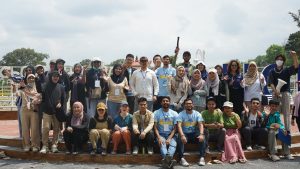
During our field trip to the Pusat Inovasi Agroteknologi (PIAT) at Universitas Gadjah Mada (UGM), we explored innovative solutions to address Indonesia’s ongoing waste management challenges. The issue of imperfect waste management has become increasingly pressing, especially with the closure of the garbage landfill in Yogyakarta this year. This has highlighted the urgency of improving waste processing, which ideally begins at the household level or on a small scale.

At UGM’s RINDU plant, we witnessed firsthand the advancements in waste processing. The facility’s transformation of the landfill site was impressive, showcasing the before-and-after scenarios demonstrating their methods’ effectiveness. Food waste, a significant component of the waste stream, is managed at UGM using Black Soldier Flies and Maggot troops. This innovative approach reduces waste and provides sustainable solutions for feed production.

Drying process of Black Soldier Fly Larvae (Maggot BSF) for Animal Feed

Speaker: Arif Mujarab, PIAT, Universitas Gadjah Mada

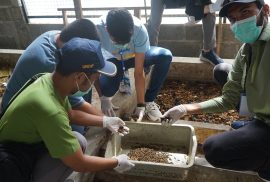
Arif Mujarab, a worker at the Pusat Inovasi Agroteknologi Terpadu (PIAT) at Universitas Gadjah Mada, with two children and several years of experience, provided an overview of the process for drying black soldier fly larvae (BSF) to create animal feed. He explained that the process starts with selecting fresh, live maggots, which are then cleaned and weighed. Although the drying machine at PIAT has a capacity of 5 kilograms, he demonstrated the process using 2 kilograms for quicker results. The maggots are placed in a drying or roasting machine, and the drying process takes around 45 minutes. At the 20-minute mark, the maggots are checked for dryness, and the process continues until they are fully dried and ready for use as feed.

BSF maggot need to be separated into 3 different sizes, the smallest ones are not capable enough to digest organic matter. so they need to be cultivated in order to have a bigger size. the biggest size one are capable to digest all organic matter. the organic matter such as food waste but it needed longer time to proccess the hard part like eggshell.

Manufacturing Bottle Caps Using Recycled Materials

Speaker: Surono

Surono, who has worked at the facility for 13 years and is a father of two daughters, one of whom is preparing to enter college, discussed the manufacturing process of bottle caps using recycled materials. He described how plastic materials are first shredded into smaller pieces and then heated to a temperature of approximately 180 degrees Celsius for 15 to 17 minutes. Once heated, the materials are pressed and held under pressure for about 5 minutes. The formed bottle caps are then removed from the mold, completing the process.

Internship Experience in Energy and Waste Processing at PIAT

Speaker: Muhammad Ridwan Alfin, Marine Science Department, Universitas Padjadjaran

Muhammad Ridwan Alfin, a student from the Marine Science Department at Universitas Padjadjaran, completed a four-day internship at the Pusat Inovasi Agroteknologi Terpadu (PIAT) at Universitas Gadjah Mada. During his internship, he gained hands-on experience in energy and waste processing, which contrasted with his classroom learning. The practical fieldwork allowed him to apply his academic knowledge directly. He also emphasized the importance of teamwork, which he experienced throughout the internship, and noted that this opportunity has equipped him with valuable skills for his future career.

Our visit included practical experiences, such as hatching maggot eggs and participating in the collection, sorting, drying, and packing of maggots for feed. We also learned how to create eco-enzymes from organic food waste, an initiative that promotes sustainability and environmental responsibility. Additionally, the opportunity to hatch chicken eggs and interact with deer was a delightful experience, adding a fun and educational aspect to our visit.

UGM PIAT is truly making remarkable strides in waste management and sustainability. Their commitment to innovation and education is evident, and it was inspiring to see their efforts in action.

At PIAT FTP UGM, black soldier fly larvae are used for the waste conversation. So first we introduced the BSF life cycle. From egg to produce larvae it takes 7 days. This is one of the easiest and most popular processes in the world. For sustainable waste management, this plant collects waste from the UGM campus area. Then they sort out the waste in different categories like waste from food, waste from plastic etc. At Rindu plant, first food wastes the grinding at grinder machines and then when it comes to powder form they mix milk and some other ingredients to make quality full fertilisers. And lastly there also has a machinery for making granular forms of fertiliser. They shared that this eco-friendly waste management is really profitable. 

Recent Posts

  • Three DTPB FTP UGM Study Programs Secure ASIIN International Accreditation Through 2030
  • Dari Benih hingga Lahan, FTP UGM dan Sang Hyang Seri Kembangkan Teknologi Pertanian Berbasis Data
  • Learning Across Cultures at Jeonbuk National University, South Korea
  • Beautiful Learning Journey: A Student Exchange at JBNU, South Korea
  • My Experience at Khon Kaen University (TPHP Student Mobility Program)

UGM News

  • UGM’s Youngest Doctoral Graduate Advances Native Chicken Genetics
  • UGM and NTU Host ASEAN Summer School on Renewable Energy and Smart Cities
  • BSI Scholarship Helps First-Generation Student Silvia Study Chemistry at UGM
  • Black Aromatic Ginger and Gotu Kola: UGM Study Finds Potential Herbal Therapy for Optic Nerve Inflammation
  • UGM Promotes Green Dentistry Through Free Dental Checkups and Oral Health Education
Universitas Gadjah Mada

UNIVERSITAS GADJAH MADA
FACULTY OF AGRICULTURAL TECHNOLOGY
Jl. Flora No. 1 Bulaksumur
Yogyakarta, Indonesia 55281
+62 274 589797
+62 274 589797
fateta[at]ugm.ac.id

Faculty Information

  • News Release
  • Event
  • Academic
  • Scholarship
  • Job Vacancy
  • Grant

Department

  • Food and Agricultural Product Technology
  • Agricultural Engineering and Biosystem
  • Agro-industrial Technology

Supporting Units

  • Quality Management Unit
  • Agricultural Technology Career Center

Journals

  • Agritech
  • Agroindustrial Journal
  • Indonesian Food and Nutrition Progress

© 2026 Faculty of Agricultural Technology UGM

SitemapPrivacy PolicyContact

KEBIJAKAN PRIVASI/PRIVACY POLICY

[EN] We use cookies to help our viewer get the best experience on our website. -- [ID] Kami menggunakan cookie untuk membantu pengunjung kami mendapatkan pengalaman terbaik di situs web kami.I Agree / Saya Setuju