
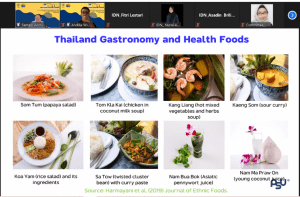
 The last day of the 3rd Summer Course of Local Indigenous Functional Food’s Roles in the Era of Covid-19 Pandemic: From Farm to Table was held on July 23rd, 2021. The first session was delivered by Assoc. Prof. Dr. Santad Wichienchot, Ph.D. from Prince of Songkla University about “Influence of Functional Foods on Gut Microbiota”. Prof. Santad explained about functional foods and functional ingredients, gut microbiota, probiotics and prebiotics, and gastronomy.
In addition, the session was continued by watching the recorded presentation from the group projects. The presentations were about “Golden Milk” from Group 1, “Seaweed Crispy” from Group 2, “Butterfly Pea Tea” from Group 3, “Marine Collagen Peptide” from Group 4, “Greek Yoghurt” from Group 5, “Black Garlic” from Group 6, “Butterfly Pea Yogurt” from Group 7, and “Flavoured Kombucha” from Group 8.
After finished all of the activities, the closing ceremony was held at 2.30 p.m. local time (GMT +7). The closing ceremony of the 3rd Summer Course was attended by the Dean of the Faculty of Agricultural Technology, the representative of the Office of International Affairs, Universitas Gadjah Mada, the lecturers, and the participants. The closing remarks were given by the chairperson, Dr. Arima Diah Setiowati, the Dean of the Faculty of Agricultural Technology, Prof. Eni Harmayani, and the representative of Office of International Affairs, Universitas Gadjah Mada, I Made Andi Arsana, Ph.D. There were some testimonies from the lecturers represented by Prof. Kune-muh Tsai dan Prof. Takuya Sugahara. Other than that, some participants were asked to give their impressions during the summer course. Therefore, the best group, the best participant, and the most active participant were announced to be awarded. Thank you very much for all the speakers, participants, and committee for the amazing memories! See you next year!
 The first session was about “Functional Foods Marketing and Management” which was delivered by Dr. Merve Kaya. The main topic Dr. Merve Kaya discusses is Microalgae. Currently, microalgae are used in agriculture, aquaculture, human nutrition, animal nutrition, and cosmetics. In the future, microalgae might be used for pharmaceuticals, biomaterials, and biofuels. In addition, Microalgae have benefits in many fields such as a plant-based source with eco-friendly extraction, organic base macronutrients, and complete amino acid, and metabolic profiles with free L-amino acids. Other than that the benefits of microalgae were improving crop vigor, creating healthier plants, advancing flowering and seed/fruit development, and increasing the tolerance to abiotic stress. Hence, it is possible to create new agricultural solutions and a sustainable farming environment using microalgae products.
 In addition, the second session was about “Supply Chain Management in Functional Food Industry” by Prof. Kune-muh Tsai. He opened the discussion with the definition of the supply chain. Other than that, Prof. Kune-muh Tsai gave an example where the functional food industry in Taiwan is mainly distributed across the midstream and the downstream. Next, Prof. Kune-muh Tsai also talked about the functional food supply chain, the differentiation between supply chains of functional food in Taiwan and Brazil, the example of the yogurt supply chain in China, supply chain of challenges of functional food due to trade war and pandemic, cold chain practice (best practice), and international supply chain also explained. Moreover, Prof. Kune-muh Tsai also explained how to control the supply chain risk.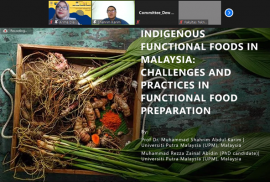
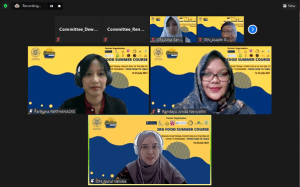 In the second session, the lecture was delivered by Assoc. Prof. Dr. Parthana Parthanadee about “Supply Chain and Logistics Analysis of Functional Foods Industry”. This session was led by Rendayu Jonda Neisyafitri, S.T.P., M.Sc. Prof. Parthana explained the drivers of supply chain and metrics in terms of responsiveness and efficiency, types of facilities, components of facilities, the role of facilities, inventory, transportation, data and analysis, price and the supply chain. The main process of supply chain includes planning, source and resources, create, deliver and returns. In addition, the supply chain operations structure consists of four major sections including performance, processes, practices, and people. By the end of his lecture, Prof. Parthana described the characteristics of agri-food supply chains that need to be taken into deliberate consideration when evaluating the resilience, including biological processes, perishability, structure, necessity, and system’s perspective.
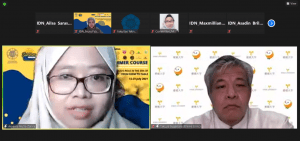 In the third session, the Prof. Takuya Sugahara shared the critical concept and idea about “Functional Foods In Japan: Regulation And Effects On Health”. This session was led by Aryanis Mutia Zahra, S.TP., M.Si. In the beginning of the lecture, Prof. Sugahara brought all the participants to the introduction of Ehime University at glance as he is affiliated at Ehime University. Subsequently, Prof. Sugahara divided his lecture into 3 sub-themes including Functional Food System in Japan, Evaluation of Food Functions, and Health Function of Spice. In Japan, food products were categorized into four groups, which comprise of food in general, foods with health claims, pharmaceutical products, and quasi-pharmaceutical products. In addition, Prof. Sugahara explained the various categories of food functions. In the other hand, Prof Sugahara emphasized that the critical concept of food with health claims is healthy foods that meet standards determined by the government and regulation. In terms of the regulation, functional food is divided into three main categories which include Food with Nutrient Function Claim (FNFC), Food for specified health use (FOSHU) and food with Function Claims (FFC). Food with Nutrient Function Claim (FNFC) is food that is characterized by the role vitamins and minerals added in the food. Food for Specified Health Use (FOSHU) is food that is scientifically recognized for its beneficial health impact, while Food with Function Claims (FFC) is a food which can be indicated with a function claim based on scientific evidence under the supplier’s responsibility.
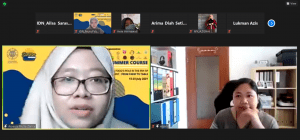 Moving on to the last session, the lecture was delivered by Dr. Realm Kohler geb. Alis about “Indigenous Functional Foods in the Philippines”. This session was led by Aryanis Mutia Zahra, S.TP., M.Si. Dr. Realm opened the lecture by sharing some data about the current health and nutrition in ASEAN. Then she explained about dietary diversification which defined the significance that diet must include sufficient quantity and variety of good quality of food that will cover most of the essential nutrients needed by the body. Southeast Asia (SEA) is considered as the food bowl of Asia which reflected by its huge biodiversity. In addition, Philippines is one of the 17 mega diversity countries in the world. Despite of its resource’s potency, Philippines has no specific regulations for functional foods. In general, some functional foods in Philippines are derived from its diversity of genetical natural resources, such as pigmented rice (brown rice), mangosteen, malunggay, turmeric, coffee, and fish.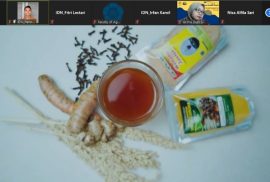
 In the second session, Professor Makoto delivered the lecture about “Effective use of Food System Biomass Present in Okinawa, Japan”. Prof. Makoto explained about : economic bio-surfactant production from sugarcane resources, studies on nanometer-size capsules containing food materials, and anti-stress effect of brown sugar produced from sugarcane. Sugar in all tropical and subtropical areas in the world is obtained mainly from sugarcane and beet. It is high in sucrose and other bioactive components such as minerals, phenolic components, and policosanol. Prof Takahashi also explained the basic theory of emulsion and interfacial activity and surfactants specifically, surface-active compounds as a product of biotransformation by microorganisms (bacteria and yeast). He then explained the production of biosurfactants from mollasses and sugar cane juices. It was then followed by a lecture on the application of nanometer-size capsules containing food materials. The lecture was concluded with information on the anti-stress effect of brown sugar produced by sugarcane.
 In the third session, Dr. Nathdanai Harnkarnsujarit delivered a lecture on “Packaging Technology, Trend and Labelling for Functional Foods.” Dr. Nathdanai started the lecture with an introduction to art science in packaging technology. One of the sciences is packaging technology in food products. The first step to determine the suitable packaging was identifying the food deterioration and spoilage of the targeted food product. The next step was selecting packaging materials and equipment, evaluating prototype packages, and testing them in the market. He proceeded by giving information on smart packaging. Smart packaging was associated with active packaging. Active packaging changes the condition of the packed food to extend shelf life or improve safety or sensory properties while maintaining the quality of packaged food. Before closing his session, Assoc. Prof. Dr Nathdanai Harnkarnsujarit explained that the recent pandemic creates new opportunities in the functional food industry since there is a shift in consumer behavior towards healthier products. In addition, when designing the package, the producer should consider not only the convenience of the consumer. Lastly, packaging sustainability should also be a concern because of its effect on the environment.
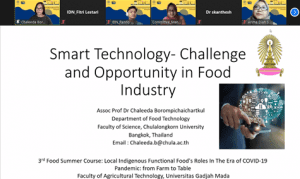 The last session of the lecture was delivered by Assoc. Prof. Dr. Chaleedaa Borompihai about “Smart Technology-Challenge and Opportunity in Food Industry 4.0”. Dr. Chaleedaa opened the lecture with a brief introduction Departement of Food Technology, Chulalongkorn University. She then explained the development of the food industry from food industry 1.0 to food industry 4.0. Industry 4.0 aggregates existing ideas into a new value chain that plays a crucial role in transforming whole value chains of life cycles of goods while developing innovative products in manufacturing that involve the connection of systems and things that create self-organizing and dynamic control organization. In addition, it focuses on food servicing by using cyber-physical systems to monitor, analyze, and automate business. There are challenges and opportunities in doing Industry 4.0 but we must preserve and study the challenges to overcome them. Examples of challenges are knowledge of using technology, cost of implementation and investment, employment of high skills labor, technology disruption, and deep research that supports the use of technology and funding. Then Dr. Chaleedaa Borompichaichartkul explained the importance of design thinking as a systemic approach to start understanding innovation. There are five keywords including empathize (innovation should be human-centered), define (innovation should solve a problem), ideate (innovation is born from a clash of ideas), prototype (innovation should be brought to life), and test (innovation should be refined). The day 7th of the 3rd Summer Course was ended with the participant performing an independent study on the packaging design, claim, and technology they will use for their Final Project.
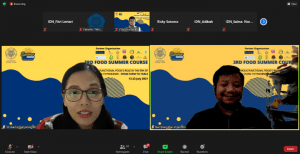 The second session, the lecture was delivered by Dr. Widiastuti Setyaningsih about “Extraction of Active Compounds from Edible Flowers”. Dr. Widi explained about her research, which extraction of active compounds from edible flowers, the essentials of edible flower and analytical methods to take advantage of the edible flowers. The major compound in bioactive compounds included in fruit flowers and ornamental flowers is the phenolic acid. This compound makes edible flowers have many functionality such as the antioxidant, anti-inflammatory, antimicrobial, anticancer, neuroprotective agent, antidiabetic, uricosuric agent, and anti-hemolytic. To optimize the results of phenolic components, extraction methods were developed including maceration, UAE (ultrasound-assisted extraction) and MAE (microwave-assisted extraction).
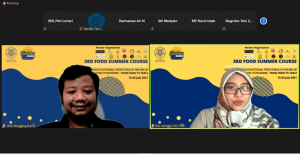 The third session, the material elaboration by Dr. Dwi Larasatie about “Functional Food Product Development”. Dr. Dwi started the lecture with learning three generic perspectives, including business development perspective, company perspective, and product development perspective. Dr. Dwi also explained about the role of customer and market evaluation, marketing plans, production and product launching. Dr. Dwi explains the material then participants practice the material that has been explained and closed by presentations from several participants.
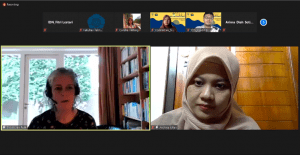 The last session, the lecture was delivered by Prof. Saskia van Ruth from Wageningen University and Research, The Netherland, about “Food Fraud Prevention and Detection in Herbs and Spices and Supply Chain Networks”. Prof. Saskia opened the lecture discussing fraud in every aspect of life. And she focused it on food fraud including deceit and it was done on purpose and for raking more money. The first main topic is discussing factors in food frauds’ aspect are ingredients and constituents, geographical origin, production system, and processing. Spices are the most expensive products in the supermarket so it is the most fragile type of food that gets fraud. Also the longer the supply chains are the more misty, and could become easier and more tempting to do food fraud. Economic drives also play a big role as the price of the specific food is increasing the more people want to commit food fraud for their own profits.Prof. Saskia also presented her survey regarding students’ integrity quiz. The results of the survey was that dishonesty is everywhere, not just in food fraud. There are also many fraud monitoring detection methods, including chromatography, mass spectrometry, DNA based techniques, immunology, physical test, wet chemistry, etc. Prof. Saskia ended the lecture by mentioning the system and the development in preventing food fraud in the future heading for analyses of integrated decision support tools (ICT systems), big data and citizen science.